
 Tiếng Việt
 한국어
 日本語
Article
Moving To HCMC: Where Your Shipment Goes Before You Have An Apartment 2027
On this page
If your international shipment reaches Ho Chi Minh City before you have confirmed a permanent address, it does not simply wait at the door. It enters a port or airport process, goes through customs procedures, and moves to a temporary storage facility arranged by your moving company or destination agent. This guide explains every stage so you can plan your relocation to HCMC with clarity and confidence.
What Happens When Your HCMC Shipment Arrives?
When your international shipment arrives in Ho Chi Minh City, it goes directly to a port terminal or airport cargo facility, not to your future apartment. The consignment must pass through handling, documentation matching and customs procedures before it can be transferred to any storage or delivery location. In practice that means two separate waits, one at the terminal and one for the customs decision, before anyone can talk about a delivery date.
Sea Freight and Air Cargo Arrival Process
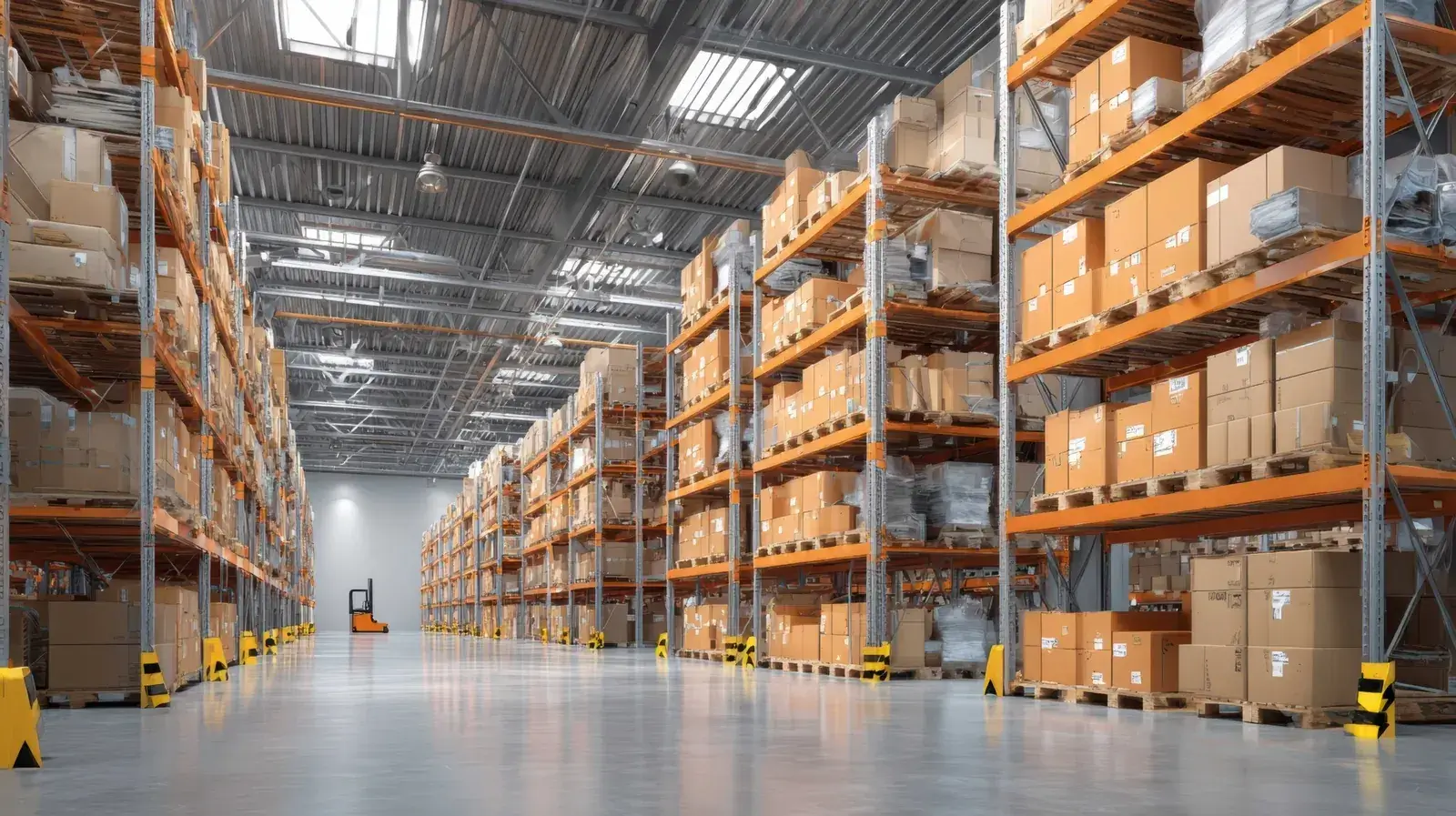
Sea freight shipments bound for Ho Chi Minh City are typically processed at Cat Lai Port, the main container terminal serving southern Vietnam, while air freight shipments are handled at the Tan Son Nhat International Airport cargo facility. Sea freight runs through Cat Lai Port in Thu Duc City, air freight through the Tan Son Nhat cargo terminal, and the two follow different timelines, typically two to five business days from arrival to clearance for air cargo when documents are in order.
Cat Lai Port, located in Thu Duc City, is the primary gateway for household-goods containers arriving by sea. When your container or shared container space docks at the terminal, stevedores unload it and the goods are staged in the terminal yard. Your destination agent and the port operator coordinate the first round of documentation matching, checking the Bill of Lading against the physical cargo. No goods leave the terminal until the customs authority confirms that the declaration has been accepted and inspection, if required, is complete.
Air freight follows a faster but no less regulated path. Pallets are off-loaded at the Tan Son Nhat cargo terminal, scanned into the system, and transferred to a bonded storage area within the facility. The Air Waybill triggers the customs declaration process. Because air shipments are smaller and faster than sea freight, the turnaround from arrival to clearance is typically shorter, often two to five business days if documents are in order. Travellers who land before their consignment often need somewhere to leave suitcases in the meantime, and safe luggage and suitcase storage in HCMC covers the short-term options near the airport.
Suitcases that travel with you need a short-term answer of their own while the consignment clears, and suitcase storage near Tan Son Nhat lists the options within reach of the airport.
LCL vs FCL Shipment Differences in HCMC
Less-than-Container-Load (LCL) shipments share container space with cargo from other customers, while Full-Container-Load (FCL) shipments occupy an entire container and move as one discrete unit through the port, usually resulting in a faster and simpler process. The practical difference is deconsolidation: an LCL consignment waits for the shared container to be unpacked, which adds two to five business days, while an FCL container stays sealed until it reaches the agreed destination.
For most individual expats and families relocating to Ho Chi Minh City, LCL is the more common choice because household volumes rarely fill a full 20-foot or 40-foot container. The trade-off is time: an LCL shipment must wait at the consolidation depot for the container to be deconsolidated and the customer’s portion to be separated from other cargo. This adds two to five business days to the process.
FCL shipments clear the port faster because the container does not need to be opened for deconsolidation until it reaches the agreed destination. For families shipping more than 15 to 20 cubic metres (roughly the contents of a fully furnished two-bedroom apartment), FCL is often more cost-effective and results in less individual handling of boxes and furniture. Volume is also what storage providers charge on, and storage priced by m³ versus m² explains why the same consignment can produce very different invoices under the two methods.
Who Handles Your Moving to HCMC Shipment
At least five parties are involved in managing an international shipment from the moment it arrives in Vietnam: the international moving company, the local destination agent, the freight forwarder, the customs broker, and the port or airport handling operator. They are the international moving company, the destination agent, the freight forwarder, the customs broker and the terminal operator, and almost every delay traces back to a gap between two of them rather than to the cargo itself.
Each plays a distinct role, and knowing which one to call saves days when something stalls:
- International moving company, based in the origin country, coordinates the full move and appoints the destination agent in Vietnam.
- Destination agent is the local point of contact for port handling, customs documentation and final delivery.
- Freight forwarder manages the physical movement of the container or pallet between locations.
- Customs broker files the import declaration and liaises with customs officers.
- Port or airport operator controls the terminal itself and charges handling fees for each stage of the consignment’s stay.
Understanding who does what matters because delays are almost always caused by a breakdown in communication between these five parties. Keep the contact details of the destination agent accessible throughout the process and ask for a named contact at each stage.
Customs Clearance Before Moving to HCMC Storage
Customs clearance and temporary storage are two separate stages of an international move. Your shipment may be held in a customs-controlled location while clearance is pending, and it can only enter an ordinary commercial storage facility after the customs authority formally releases it. The order matters for planning: clearance first, then storage, and any arrangement that reverses the two is not compliant with Vietnamese customs rules.
What Customs Clearance Means for Personal Effects
Customs clearance is the official process by which the Vietnamese customs authority reviews the import declaration, verifies documents, and either releases the goods or requests a physical inspection before granting release. Personal effects are treated differently from commercial cargo but are not exempt from the process, so the declaration, the supporting documents and a possible physical inspection all apply, and any mismatch between the inventory and the contents causes delay.
Personal and household effects are categorized differently from commercial cargo, but they are not automatically exempt from customs procedures or duties. Vietnam’s Customs Law requires personal relocation assets to undergo the full customs supervision process. The importer, or the destination agent acting on the importer’s behalf with a signed power of attorney, must file a declaration and provide supporting documents demonstrating that the goods are genuinely personal in nature and that the importer has a legitimate reason to reside in Vietnam.
Customs officers may examine only the paperwork, or they may request a physical inspection of the shipment. If selected for inspection, the container or boxes are opened at the port or airport facility under customs supervision. Any discrepancy between the declared inventory and the actual contents can result in delays, re-inspection, or additional charges.
Documents Needed for International Moving to Vietnam
The exact documents required depend on the importer’s status, the shipment type, and current customs rules, so the list below should be treated as a preparation checklist rather than a universal legal requirement. Always confirm with a licensed customs broker before shipping. The table below is a preparation checklist covering identity, legal stay, employment, inventory and freight paperwork, and every line should be reconfirmed with a licensed customs broker before the shipment leaves the origin country.
| Document | Purpose | Notes |
|---|---|---|
| Passport (copy) | Identity verification for customs declaration | Must match name on all shipping documents |
| Visa or Temporary Residence Card | Proof of legal stay in Vietnam | Type affects duty-exemption eligibility |
| Work permit (if employed) | Confirms legitimate reason for relocation | Required in most employed-expat cases |
| Detailed packing list | Itemized inventory for customs review | Include descriptions, quantities, and estimated values |
| Bill of Lading or Air Waybill | Official freight transport document | Provided by the freight forwarder |
| Power of attorney for destination agent | Authorizes agent to act on importer’s behalf | Must be notarized if required by the customs office |
| Proof of previous residence (6+ months) | Supports duty-free personal-effects claim | Bank statements, utility bills, or tenancy records |
The FIDI Vietnam Import Customs Guide, an industry reference for international household-goods moves, notes that document requirements are subject to change and must be reconfirmed with a licensed local customs broker before the shipment departs from the origin country.
What Happens If Customs Documents Are Incomplete
If customs documents are missing, incorrect, or not yet ready when the shipment arrives, the goods will remain under customs supervision at the port or airport, with daily handling and storage fees continuing to accumulate until the issue is resolved. A sworn translation adds two to three business days, a formal letter of explanation adds more, and an inspection triggered by an inventory discrepancy can extend the timeline by one to two weeks while storage fees keep running.
The destination agent will notify the customer of the problem and advise on the fastest path to resolution. In some cases, a sworn translation of a foreign document is required, which adds two to three business days. In other situations, the customs office may request a formal letter of explanation or additional supporting evidence. Physical inspections triggered by discrepancies in the declared inventory can extend the timeline by one to two weeks. The key action for anyone moving to Ho Chi Minh City is to prepare and authenticate all customs documents before the shipment leaves the origin country.
Where Your Shipment Goes Without an Apartment
If a confirmed delivery address in Ho Chi Minh City is not available, the international mover can arrange temporary storage, commonly called storage-in-transit. The shipment remains in a secure location under the mover’s or destination agent’s care until the final delivery order is given. Three options exist in practice, the mover’s own warehouse, the destination agent’s facility, and a bonded warehouse if clearance is still pending, and each has different rules on access and billing.
Storage-In-Transit With Your International Moving Company
Storage-in-transit is a temporary holding service in which packed boxes or the original container are kept in a secure warehouse while housing arrangements in Ho Chi Minh City are finalized. It is designed for exactly the gap between arrival and a confirmed address, with goods usually left sealed to limit handling, and billing that starts once the free-storage days in the contract run out.
The goods may remain sealed inside their original cartons or inside the original container, depending on the service level agreed in the moving contract. This minimizes additional handling and reduces the risk of damage. When the customer confirms an apartment, the mover schedules the final delivery run. Ask the moving company in advance whether storage-in-transit is included in the original quote or billed separately, and confirm the maximum number of free-storage days before additional charges begin.
If the gap turns out to be months rather than weeks, the cheaper pattern is to take delivery and move the overflow separately, which is the approach storing belongings during a renovation describes for households caught between two addresses.
Destination Agent Warehouse for HCMC Shipments
The local destination agent in Ho Chi Minh City may operate, or have an agreement with, a commercial warehouse where belongings can be held after customs clearance while apartment hunting continues. The agent records the inventory and carries responsibility for security and condition, so ask in writing for the warehouse address, the CCTV and access arrangements, the insurance position, and the policy on client visits.
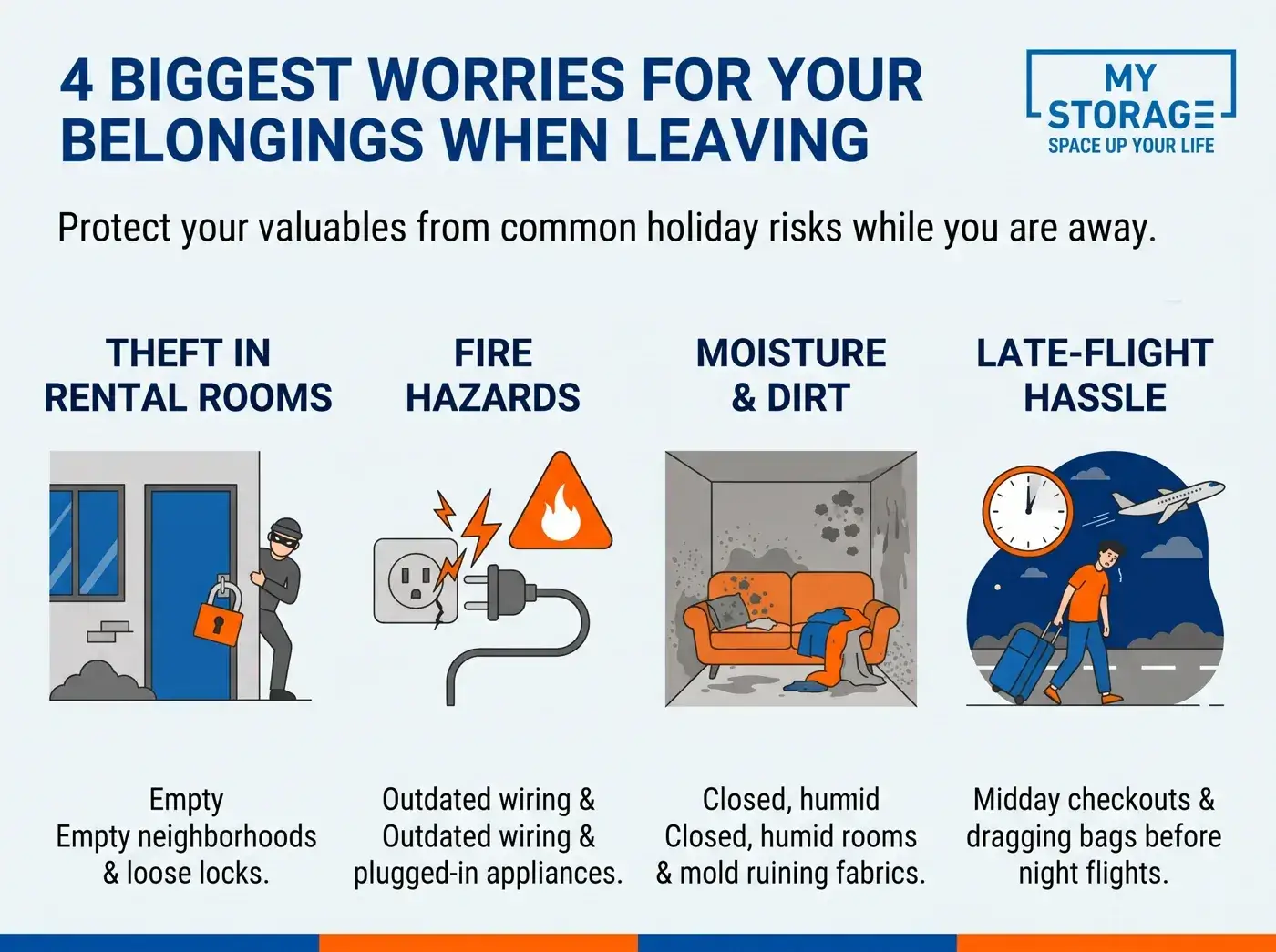
In this arrangement, the destination agent receives the goods, records the inventory, and maintains responsibility for the security and condition of the shipment. Request written confirmation of the warehouse address, the security measures in place (CCTV coverage, access control, insurance), and the policy for client visits during the storage period. Redelivery is coordinated directly with the agent once the apartment address is confirmed. The points worth checking are the same ones set out in warehouse security systems, from camera coverage to who may access the goods.
Bonded Warehouse vs Commercial Storage Facility Explained
A bonded warehouse is a specific customs-regulated facility where goods may be stored under customs supervision while clearance is still pending. It is not interchangeable with an ordinary commercial warehouse or a self-storage unit. Only a bonded warehouse may legally hold goods that have not yet been released, so never assume that a warehouse named by a mover is bonded; ask the destination agent to state the customs status of the proposed location in writing.
Under Vietnamese customs legislation, a bonded warehouse is a designated and officially approved area where imported goods that have not yet received customs release can be held legally. The movement, access, and release of goods in a bonded warehouse are all subject to customs authority rules. By contrast, an ordinary commercial warehouse operated by a moving company or destination agent can only receive goods that have already cleared customs. Never assume that every warehouse used by a moving company is a bonded facility; ask the destination agent explicitly to clarify the customs status of any proposed storage location. The way commercial space is classified and priced is covered in business storage and warehousing solutions.
Self-Storage as a Post-Clearance HCMC Option
Self-storage is a valid alternative for belongings that have already been released from customs and need a separate or longer-term holding arrangement, but it cannot serve as a substitute for a bonded warehouse or a storage-in-transit service during the customs-clearance stage. It works for the part of a shipment that will not fit the new apartment, on a flexible monthly contract with access managed by the customer rather than the mover, but only after the customs release order has been issued.
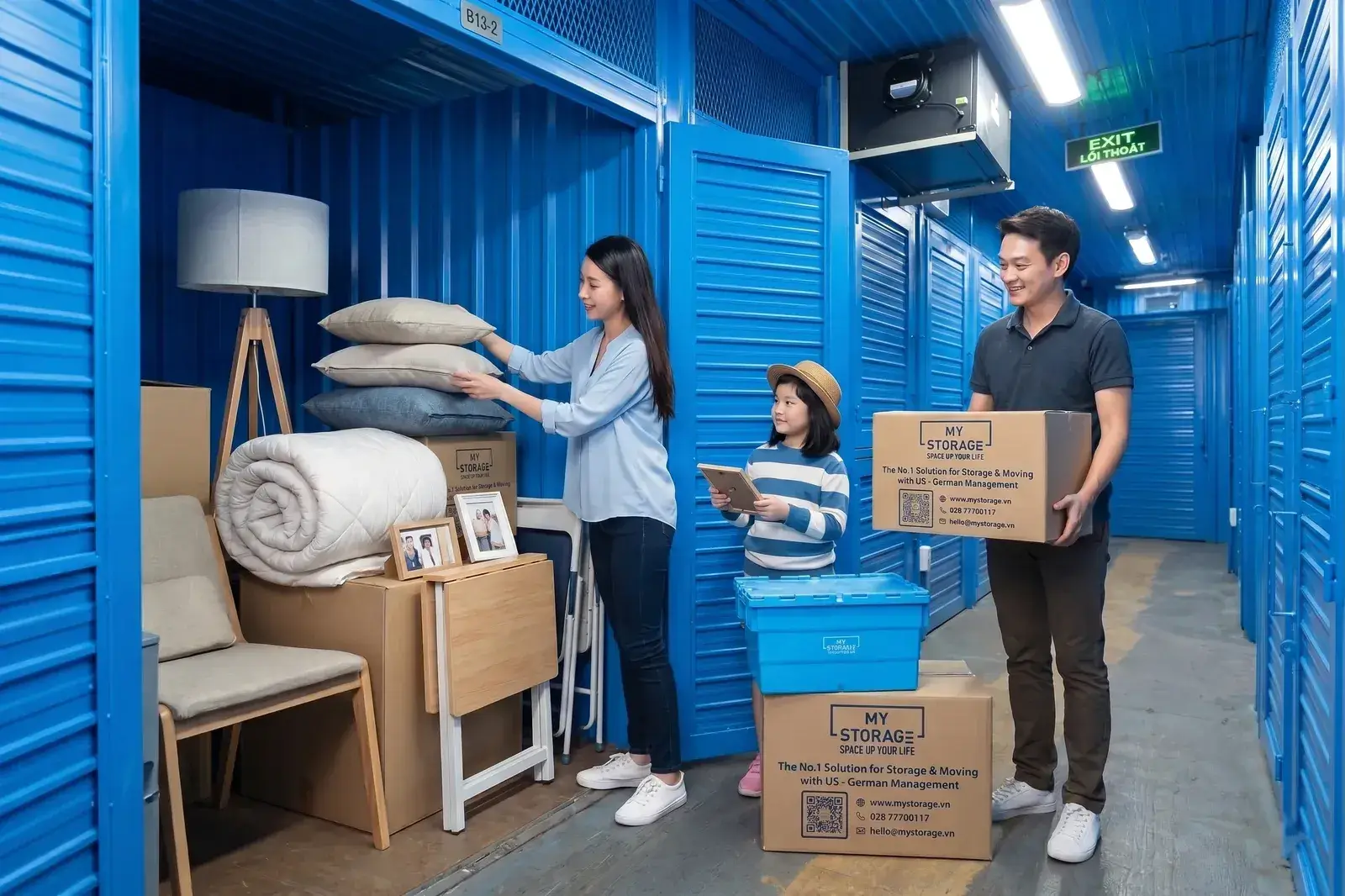
Once a shipment has cleared customs and been released by the mover, it is possible to move some items into a private self-storage unit in Ho Chi Minh City if the new apartment cannot accommodate everything immediately. Self-storage units are typically rented on a flexible monthly basis, and access is managed directly by the customer. MyStorage offers private self-storage units across Ho Chi Minh City with 24/7 climate control, flexible contracts, and an optional pickup-and-delivery service that can collect items directly from a moving warehouse and deliver them to the storage unit on the customer’s behalf. personal mini storage rental starts at 1 m³ and scales up as the apartment fills, and household goods and luggage storage sets out what a family-sized unit holds.
Clothing and bedding are usually the first boxes that will not fit, and packing cubes for suitcase and clothing storage shows how much volume careful compression removes before you pay for a larger unit. Footwear needs its own handling, which the best way to store shoes sets out.
| Criteria | Moving Warehouse / Storage-In-Transit | Bonded Warehouse | Self-Storage Unit |
|---|---|---|---|
| Main purpose | Temporary holding of an international shipment | Storing goods under customs supervision before clearance | Private space for personal belongings after clearance |
| Customs status of goods | Must have cleared customs | May be pre-clearance (pending release) | Must have cleared customs |
| Who manages access | Mover or destination agent | Customs authority and bonded operator | Customer directly |
| Typical contract | Linked to international moving contract | Subject to customs regulations | Separate monthly rental agreement |
| MyStorage a valid option? | No (this is the mover’s service) | No (requires customs authority approval) | Yes, for post-clearance personal storage |
| Best suited for | Full household shipment awaiting delivery | Shipment waiting for customs release | Excess or long-term storage after move-in |
How Much Does HCMC Shipment Storage Cost?
Temporary storage costs depend on shipment volume (measured in cubic metres), storage duration, handling requirements, insurance coverage, and eventual redelivery distance. Always request an itemized quotation covering every stage from arrival to delivery before committing to any provider. Volume is measured in cubic metres, duration is billed per day, week or month depending on the contract, and handling is charged each time the goods are moved, which is why a lump-sum quotation hides more than it answers.
Key Factors That Determine Storage Costs
Volume, duration and handling are the three primary cost drivers for temporary shipment storage in Ho Chi Minh City, and prices vary significantly between moving companies and warehouse operators:
- Volume is measured in cubic metres: a one-bedroom move runs 10 to 15 m³, a family of four 25 to 40 m³.
- Duration is billed per day, per week or per calendar month depending on the contract, so every extra week in storage compounds.
- Handling is charged per move event, from racking the goods to loading the delivery truck.
Shipment volume is measured in cubic metres (m³). A typical one-bedroom apartment move involves 10 to 15 m³ of goods (roughly 80 to 120 medium-sized cartons), while a family of four might ship 25 to 40 m³ (the contents of a fully furnished three-bedroom home). The longer goods remain in storage, the higher the cumulative cost. Handling charges are added each time goods are physically moved: into the warehouse, onto storage racks, off the racks, and onto the delivery truck. If the apartment has restricted access, such as a narrow lift, steep stairs, or a time-limited loading zone, additional labor charges will apply on delivery day.
Families arriving with young children usually carry the bulkiest extras, from strollers to ride-on toys, and storing children’s toys and strollers explains how to rotate them so the new apartment does not fill up on day one.
Whether goods remain sealed inside the original container (more cost-effective, less handling) or are unpacked and palletized individually (more flexible access, higher handling cost) also significantly affects the total storage bill. Packing method matters here too, and smart packing tips for clothes shows how much volume careful packing removes before anything is measured.
Additional Fees to Verify Before HCMC Storage
Beyond the base storage rate, international movers in Ho Chi Minh City commonly charge separate fees for port handling, customs-related services, redelivery, additional labor, and insurance. Each of these must be itemized clearly in the written quotation. The six categories in the table below, storage, handling, customs charges, redelivery, additional labour and insurance, are where most unexpected costs appear, so each belongs on the quotation as its own line.
| Fee Category | What It May Cover |
|---|---|
| Storage fee | Warehouse space and storage duration, usually per m³ per week or per month |
| Handling fee | Moving goods into and out of storage racks, charged per move event |
| Customs-related charges | Customs broker fees, inspection handling, applicable duties or taxes |
| Redelivery fee | Transport from the warehouse to the confirmed apartment address |
| Additional labor | Stairs, restricted lift access, long carry distance, or special item handling |
| Insurance | Coverage for loss or damage during the storage period and final transit to the apartment |
Do not accept a quotation that bundles all costs into a single lump sum. Itemized quotes allow an accurate comparison between providers and make it easy to identify which charges can be minimized by confirming the apartment address quickly and reducing the total storage duration. Insurance is the line most often misread, and whether storage insurance is needed sets out which situations are covered and which are not.
Self-Storage Rates as a Reference Point
A private self-storage unit is priced differently from a mover’s warehouse, so it is a useful benchmark when reading a relocation quote. A MyStorage Mini Box of 1 m³ to 3 m³ has a 2027 reference price of 873,000 to 1,563,000 VND (≈ US$34 to US$61) a month and a Standard S of 5 m³ to 7 m³ costs 1,796,000 to 2,886,000 VND (≈ US$70 to US$112), excluding VAT, with the 12-month plan 15% cheaper. One cubic metre holds about 8 to 10 medium cartons, and how mini storage prices are calculated breaks a monthly rate into its parts.
Questions to Ask Before Signing HCMC Quote
Before signing any moving or storage contract, ask six specific questions to protect against unexpected costs and delivery delays. Each one targets a line that movers commonly leave vague in a first quotation: The six below cover what is included, when free storage ends, how billing is calculated, whether handling and redelivery are separate, what insurance covers, and what happens if the apartment is late.
- Is temporary storage-in-transit included in the international moving package, or is it billed separately?
- When does the free storage period end, and what is the daily or weekly rate after that?
- Is billing calculated per day, per week, or per calendar month?
- Are handling charges and redelivery fees quoted separately from the base storage rate?
- Does the insurance policy cover the goods throughout the storage period as well as the final transit to the apartment?
- What happens to the storage rate and delivery schedule if the apartment is not ready by the originally expected date?
What To Do While HCMC Shipment Is Stored
The period between a shipment’s arrival in Ho Chi Minh City and its final delivery to the apartment is not dead time. Use it to confirm housing details, stay in close contact with the destination agent, and prepare the essential items that should have been kept in hand luggage rather than packed into the international shipment.
Confirm Apartment Details Before HCMC Delivery
Before the final delivery can be booked, it is necessary to confirm the exact apartment address, the building management’s delivery policy, the lift booking process, the loading access hours, and the maximum truck size permitted at the building entrance. Many high-rise buildings in Ho Chi Minh City want three to five business days of notice, restrict deliveries to weekday mornings, and ask for a refundable deposit on the lift, all of which the destination agent needs before booking a truck.
Many high-rise residential buildings in Ho Chi Minh City require advance notice of at least three to five business days before a moving truck can park at the entrance. Some buildings restrict deliveries to weekday mornings only and charge a refundable deposit for lift use during the move. Confirm all logistical details with the building manager well ahead of the planned delivery date, then share that information directly with the destination agent so the truck size and scheduling can be confirmed without last-minute surprises.
Parcels and small deliveries arriving before you move in also need somewhere to land, and parcel delivery lockers covers the automated points around the city.
Essential Items to Keep With You Personally
Certain documents and everyday items must travel in hand luggage rather than being packed into the international shipment, because they will be needed immediately on arrival in Ho Chi Minh City, before the shipment clears customs. Always carry the following separately and never pack them into the consignment: The list below covers documents, medication, electronics and a few days of clothing, and it exists because anything inside the consignment may sit at Cat Lai Port or under inspection for weeks.
- Passport and all immigration documents
- Work permit and employment contract
- Financial documents: bank cards, proof of funds, insurance policy schedules
- Prescription medication, with a supply sufficient for at least four weeks
- Laptop, phone, and all charging cables and adapters
- Two to three changes of clothing and essential toiletries
- Original packing list and all shipment reference numbers
Keeping these items on hand eliminates the risk of needing something urgently that is locked inside a container at Cat Lai Port or awaiting inspection at the customs facility. Spare laptops, cameras and chargers that do travel in the shipment need their own precautions, which safe electronic storage covers in detail.
Plan Your International HCMC Move in Advance
Coordinating the shipping schedule with the relocation timeline is the most effective way to minimize temporary storage costs and reduce the gap between the shipment’s arrival and the apartment move-in date. The table below maps each stage, from before departure to delivery day, against the task to complete and the confirmation to obtain in writing before moving on.
| Relocation Stage | Key Preparation Tasks | Confirmation Required |
|---|---|---|
| Before departure | Create a detailed inventory and prepare all customs documents | Destination agent appointed and briefed |
| During transit | Search for apartments and arrange temporary accommodation | Confirm shipment estimated time of arrival |
| Shipment arrival | Submit customs declaration via destination agent | Clearance status confirmed in writing |
| Storage period | Identify and sign the apartment lease | Storage invoice reviewed and approved |
| Apartment confirmed | Book delivery date with destination agent | Address, building access, and fees confirmed |
| Delivery day | Be present for inventory check and condition review | Signed delivery record kept on file |
Starting the apartment search before or immediately after arriving in Ho Chi Minh City, rather than waiting until after the shipment clears customs, is the single most effective way to shorten the storage period and reduce costs. Small flats fill quickly once a full shipment lands, so ways to optimise space in a small apartment is worth reading before the delivery date is set.
Stay in Contact With Your HCMC Agent
Proactive communication with the destination agent is the most effective way to prevent avoidable delays during the storage and delivery phase of the move to Ho Chi Minh City. Ask for a written weekly update covering four points: customs status, the date the goods entered storage, charges accrued so far, and the expected redelivery window.
Request a written update from the destination agent at least once a week covering four specific points:
null- Customs clearance status as of that day.
- Date the shipment entered storage, which starts the billing clock.
- Storage charges accrued to date, not just the rate.
- Estimated redelivery window once an address is confirmed.
Keep the packing list, the Bill of Lading or Air Waybill, and all shipment reference numbers in a folder that is accessible at any time. If the apartment timeline changes, notify the agent immediately so the storage and delivery schedule can be adjusted before additional costs are locked in.
Not everything needs to go into the new apartment right away. If some belongings cannot fit into the available space or are not needed on a daily basis, a private self-storage unit with MyStorage offers flexible monthly contracts and an optional pickup-and-delivery service so items can be retrieved whenever needed, without committing to a long-term storage lease. Seasonal and sports gear is the group that most often stays boxed after a move, and storage for fishing, camping and outdoor gear covers how to keep it accessible.
Seasonal items are the clearest case: Tet decorations, winter clothing from the last posting and sports gear used a few times a year all belong outside the flat, which is what seasonal storage is built around.
Storage and Workspace at MyStorage in Ho Chi Minh City
MyStorage runs two self-storage facilities in Ho Chi Minh City, at 375 Võ Nguyên Giáp and An Phú Sports Park, plus smart-locker points for small items. What matters most during a relocation is that the space is ready when the shipment is released and that the contract does not lock you in:
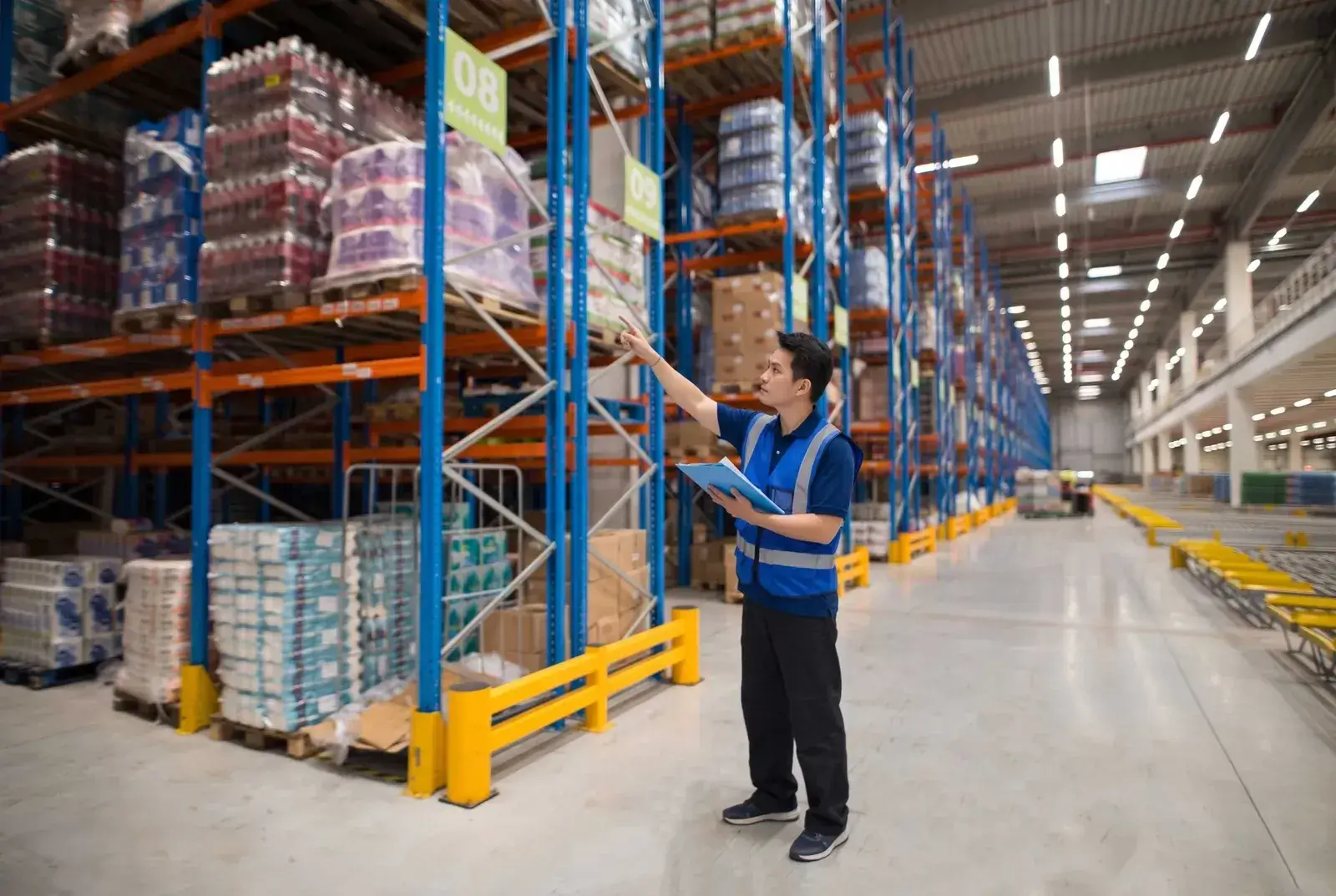
- Air-conditioned units 24/7 keep humidity steady for furniture, clothing and documents through the rainy season.
- CCTV and a personal PIN mean only you open your unit, with the entry recorded.
- 24/7 access fits an unpredictable relocation schedule rather than warehouse office hours.
- Units from 1 m³ let you store only the overflow instead of renting space for the whole shipment.
- Workspace at 375 Võ Nguyên Giáp gives startups and online sellers somewhere to work and pack orders on site.
Confirm the accepted item types, unit sizes and access terms with MyStorage before the mover schedules the release, so the handover from the moving warehouse happens in one trip. Once you are settled, how to organize a home storage room helps decide what comes home and what stays in the unit, while 8 groups of household items worth storing covers the categories most expat families keep outside the flat.
Frequently Asked Questions About Moving To HCMC And Storage
The answers below address the most common questions from expats and international families relocating to Ho Chi Minh City before securing a permanent apartment. Each answer should be verified with a licensed customs broker and destination agent before shipment, as regulations and procedures are subject to change.
Where Does My HCMC Shipment First Arrive?
Your international shipment first arrives at Cat Lai Port (for sea freight) or Tan Son Nhat International Airport (for air freight), where it is unloaded, identified, and placed under customs supervision. It does not go to any private address until the customs authority formally releases it and the destination agent or mover arranges the final delivery run. If a confirmed apartment address is not yet available, the mover will transfer the goods to a temporary storage location after clearance.
Can My Shipment Arrive Before I Do?
Yes. International shipments, particularly sea-freight containers, often depart from the origin country weeks before the owner does and can arrive in Ho Chi Minh City well ahead of the person relocating. This is manageable if a destination agent has been appointed in advance with a signed power of attorney, since the agent can initiate the customs declaration on your behalf. Personal presence is not always required, but confirm with the customs broker because visa or residence requirements may apply.
Can I Ship Belongings Before Finding an Apartment?
Yes. Most international movers offer storage-in-transit as a standard service, allowing household goods to be sent before confirming a lease or purchase agreement. The goods are held in the mover’s warehouse or at the destination agent’s facility after customs clearance, and the delivery address is provided once a lease is signed. Confirm whether storage-in-transit is included in the quote and what the rate is once the free period ends.
What If the Shipment Arrives Before the Apartment Is Ready?
If the shipment arrives before the apartment is ready, the goods will be held in temporary storage and fees will accrue according to the terms of the contract with the mover or destination agent. Notify the destination agent as early as possible if the timeline slips. Most movers can extend the storage period, but daily rates add up quickly; many companies offer a fixed number of free-storage days, typically 30, after which charges apply automatically.
Where Are Household Goods Stored Before Delivery?
Household goods are stored either in the mover’s own warehouse, in a warehouse operated by the destination agent, or in a bonded warehouse if the shipment is still awaiting customs clearance. Each option has different rules on access, billing and security. The bonded warehouse is the only facility that can legally hold goods that have not yet received customs release, so always ask for written confirmation of the facility’s customs status.
What Is Storage-In-Transit for International Moves?
Storage-in-transit (SIT) is a temporary holding service provided by an international moving company in which packed household goods are kept in a secure warehouse while housing arrangements are finalized. Goods typically remain in their original cartons or inside the original container to minimize re-handling. Billing usually starts after a free-storage period specified in the contract and continues on a daily, weekly, or monthly basis.
Is a Bonded Warehouse the Same as a Moving Warehouse?
No. A bonded warehouse is a customs-regulated facility approved by the Vietnamese customs authority where goods may be stored before clearance, while a moving company’s commercial warehouse is a private facility that can only receive goods after customs release. Confusing the two can lead to serious misunderstandings about what the mover can and cannot do with the shipment, so confirm the customs status of any proposed location.
Must the Shipment Clear Customs Before Storage?
A shipment must clear customs before it can enter any ordinary commercial storage facility in Ho Chi Minh City. If it needs to be held before clearance, it must remain in a customs-controlled location such as a bonded warehouse or the port’s own holding area. Vietnam’s Customs Law does not allow imported goods to be moved freely to private premises before a formal release order has been issued.
What Documents Are Needed to Import Personal Belongings Into Vietnam?
The core documents are a passport, a valid visa or temporary residence card, a work permit (if applicable), a detailed inventory, and either a Bill of Lading or an Air Waybill. These are required for the customs declaration and do not by themselves guarantee a duty-free outcome. The exact requirements depend on residential status, the type of goods, and the customs rules in force at the time of shipment.
Do I Pay Duty on Household Goods?
Used personal and household effects may be eligible for a duty-free import allowance if you can demonstrate that the goods have been owned and used for a qualifying period and are for personal rather than commercial use. The exemption is not automatic. New or unused goods, items in commercial quantities, or goods that cannot be linked to the importer may be subject to import duties and value-added tax, so consult a licensed customs broker before shipping.
How Long Does HCMC Customs Clearance Take?
Customs clearance for personal household goods in Ho Chi Minh City typically takes three to seven business days if all documents are correct and the shipment is not selected for physical inspection. If it is flagged for inspection, the process can extend to two weeks or longer, and incomplete documentation can add five to ten business days. Preparing documents thoroughly before shipping is the most effective way to stay on schedule.
How Much Does HCMC Temporary Storage Cost?
Temporary storage costs vary by provider, volume, duration, and service level. As a general reference in 2027, basic commercial warehouse storage runs from approximately 50 USD to 90 USD per cubic metre per month, with premium climate-controlled options priced higher. A private self-storage unit is a separate market: a MyStorage Mini Box of 1 m³ to 3 m³ costs 873,000 to 1,563,000 VND (≈ US$34 to US$61) a month, excluding VAT. Always request an itemized quotation.
Can I Access Belongings in a Moving Warehouse?
Access to goods held in a mover’s warehouse or storage-in-transit facility is generally permitted by appointment, but it is not unlimited, and most providers charge a handling fee each time goods are retrieved from racking or a sealed container. Contact the destination agent at least 24 to 48 hours in advance. In a bonded warehouse, access is subject to customs rules and may require a formal request or a customs officer present.
Can I Move My Shipment to a Self-Storage Unit?
Yes. Once a shipment has cleared customs and been released by the mover, all or part of it can be moved to a private self-storage unit in Ho Chi Minh City, provided the items comply with the facility’s acceptance policy. This is useful if the new apartment cannot take everything at once, or if seasonal items, sports equipment or excess furniture need a separate space. Ask MyStorage about unit sizes, monthly rates and whether pickup and delivery can collect directly from the mover’s warehouse.
What Should I Keep Instead of Shipping?
Always keep passports, immigration documents, work permits, financial cards, prescription medication, essential electronics, and at least three to five days of clothing in carry-on luggage rather than packing them into the international shipment. These items are needed from the moment of landing and throughout the clearance and apartment-search period, which can last from one week to two months depending on the housing market and customs processing times.
Is a Self-Storage Unit Safe for Furniture During the Rainy Season?
Humidity rather than theft is the main risk for furniture left in storage in Ho Chi Minh City, where indoor levels regularly pass 70% in the rainy season. An air-conditioned unit with humidity control, items raised off the floor and a gap from the walls prevents most damage; rainy-season storage for household items sets out the steps in full and the role of dehumidifiers in storage explains the 60% threshold.
All pricing references reflect market conditions in Ho Chi Minh City as of 2027. Document requirements and customs procedures are subject to change. Confirm all details with a licensed customs broker and your destination agent before shipping.
Related articles

Article
Do Packing Cubes Really Make A Suitcase Tidier? How To Use Them And Store Luggage 2027
Packing cubes keep a suitcase tidy and easy to search, but only mechanical compression cubes actually reduce the volume of clothes; this guide compares three types of bag, how to pack them…
Read article

Article
Storing Children’s Toys, Strollers And Everyday Items: A Tidy Apartment 2027
To keep an apartment with a small child tidy, parents should rotate toys, hang the stroller upright behind a door and move bulky items from each stage of the baby’s life into family storage…
Read article

Article
Storage Ideas For A Studio Apartment Under 40m²: Making The Most Of Your Space 2027
To make the most of the storage space in a studio apartment under 40m², use the vertical axis with floor-to-ceiling wardrobes, choose multi-purpose furniture and move rarely used belongings…
Read article
