
 Tiếng Việt
 한국어
한국어 日本語
日本語Article· Updated September 29, 2026
What is Green Logistics? Why Should Businesses Care?
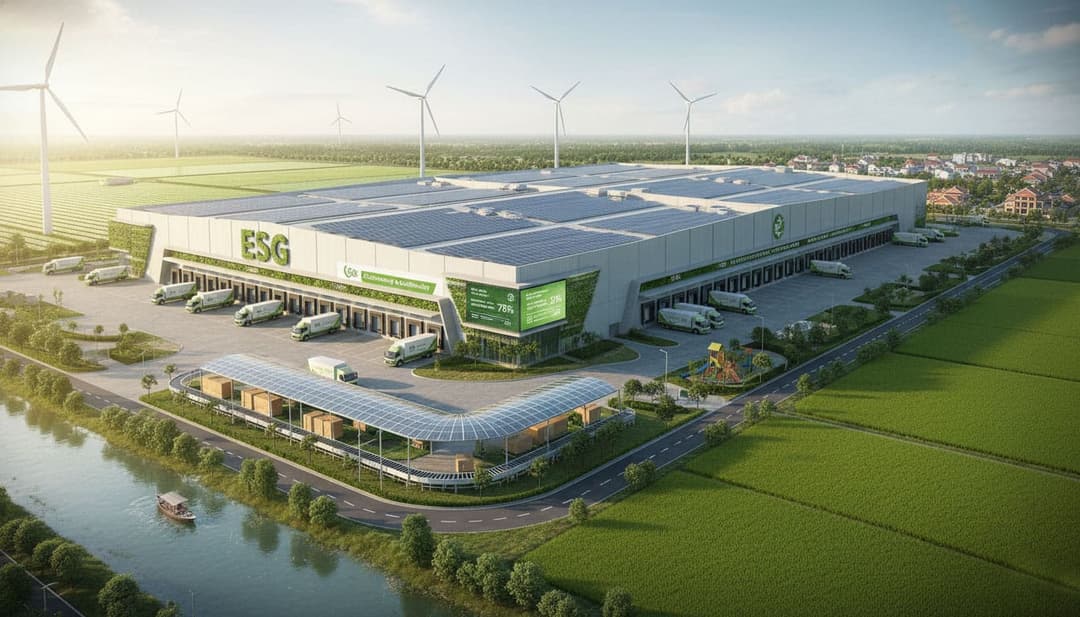
Claims in the original content about mandatory requirements from 2026, savings, price increases or investor choices do not automatically apply to every business. CBAM has specific product and party coverage, not a general obligation for every transport activity. Unsourced figures are unverified; actual results must be measured within a consistent operating boundary.
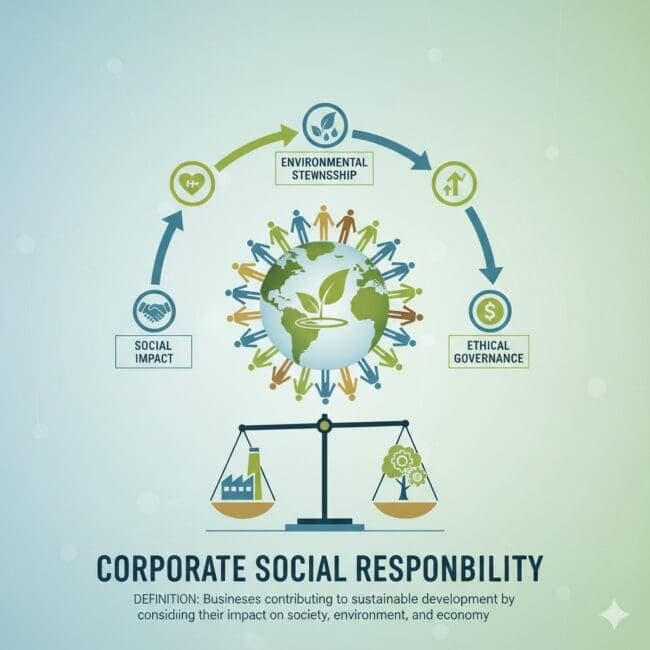
Green Logistics is a model for managing transportation, warehousing, and supply chains with the aim of reducing CO₂ emissions, saving energy, and optimizing resources. Businesses adopting green logistics not only cut long-term costs but also meet ESG requirements, export standards, and global sustainable consumption trends. According to the World Economic Forum, the logistics sector accounts for approximately 8–10% of total global CO₂ emissions.
What is Green Logistics?
Green logistics is an environmentally friendly supply chain operation system focused on reducing emissions, optimizing transportation, utilizing renewable energy, and managing waste effectively.
In the context of 2026, when Carbon tax regulations and ESG (Environmental – Social – Governance) standards become the “passport” for businesses to reach the global market, Green Logistics is no longer a mere formality but a vital strategy for optimizing costs and retaining customers.
Below is a detailed analysis of this concept:
Green Logistics (also known as Eco-logistics) is the process of planning, controlling, and operating the supply chain with the goal of minimizing negative environmental impacts (emissions, waste, noise) while ensuring economic efficiency and timeliness.
Simply put: If traditional Logistics focuses solely on “Fast – Cheap – Good,” Green Logistics adds a crucial variable: “Sustainable.”
1. Core Pillars of Green Logistics
To implement green logistics, businesses need to focus on 4 key “green areas”:
- Green Transportation: Utilizing electric vehicles (EVs), natural gas vehicles, or biofuel vehicles. Optimizing routes to reduce empty miles and CO2 emissions.
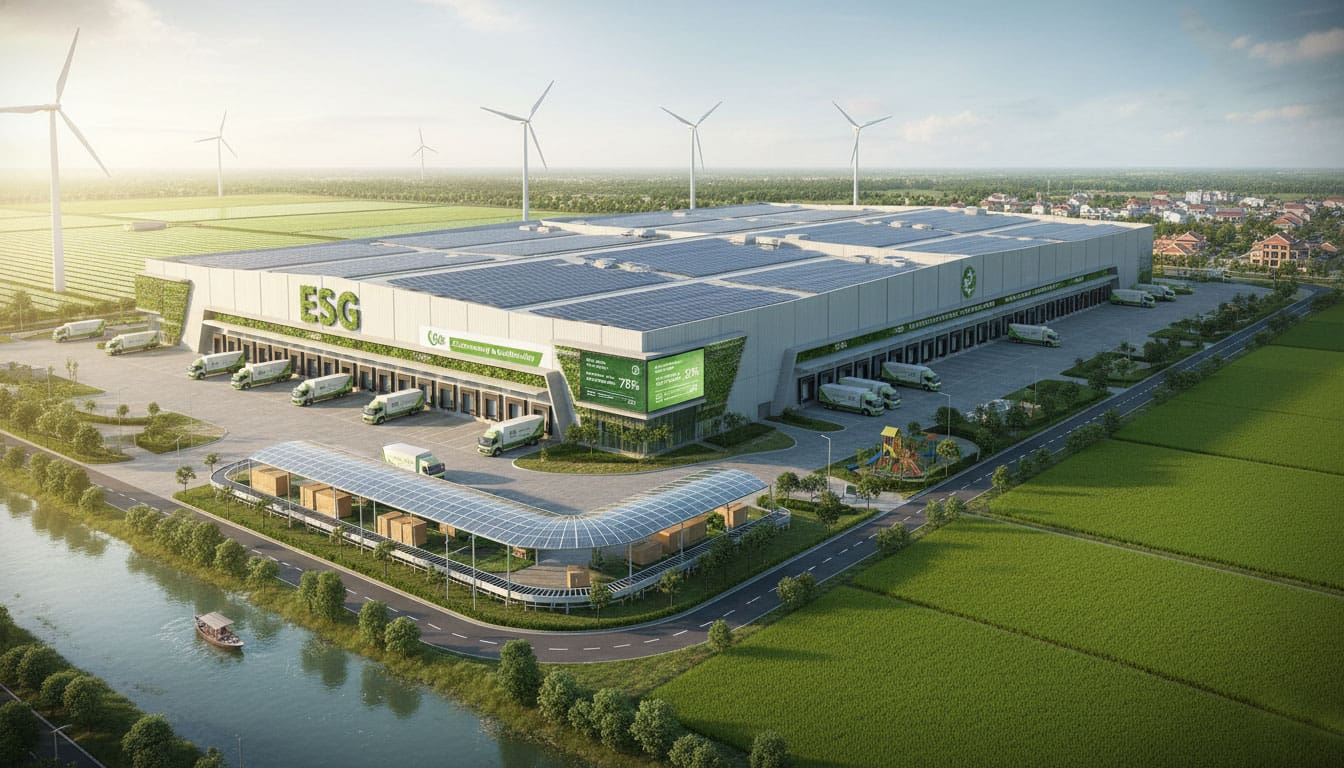
- Green Warehousing: Designing warehouses that maximize natural light, using rooftop solar energy, LED sensor lights, and a Warehouse Management System (WMS) to reduce electricity waste.
- Green Packaging: Shifting from single-use plastics to biodegradable materials, recycled packaging, or designing smart packaging to reduce size, thereby increasing loading density on vehicles.
- Reverse Logistics: Establishing processes for collecting and recycling old products and packaging from customers to reintroduce them into the production cycle (Circular Economy).
2. Traditional Logistics vs. Green Logistics Comparison
| Criteria | Traditional Logistics | Green Logistics |
|---|---|---|
| Primary Goal | Speed and Lowest Cost | Economic Efficiency + Environmental Protection |
| Energy | Fossil Fuels (Gasoline, Diesel) | Renewable Energy, Electricity, Hydrogen |
| Packaging | Prioritizes convenience, low cost | Prioritizes recycling, sustainability |
| Routes | Optimized by time | Optimized to reduce Carbon Footprint (CO2) |
3. “Golden” Concepts to Remember in 2026
When discussing green logistics, you will frequently encounter the following strategic terms:
- Net Zero: The goal of reducing greenhouse gas emissions to as close to zero as possible.
- Carbon Footprint: The total amount of greenhouse gases emitted directly or indirectly from a business’s operations.
- ESG Integration: The incorporation of environmental standards into financial reporting to attract investors.
According to a report from the IEA (International Energy Agency), transportation accounts for approximately 24% of global CO2 emissions. This means that every time you transport goods more intelligently, you are directly contributing to saving the Earth’s climate.
Why Green Logistics is an Inevitable Trend in 2026
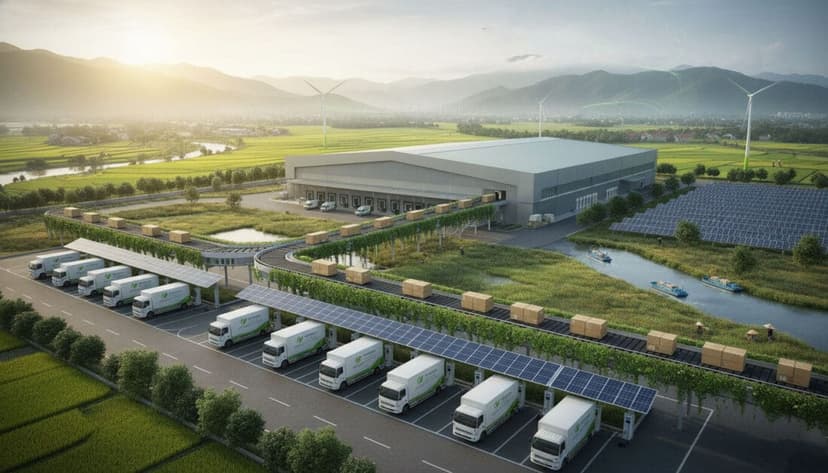
Green Logistics is becoming a mandatory trend due to pressure from environmental regulations, international export requirements, and the Net Zero strategies of many nations.
In 2026, we will no longer discuss Green Logistics as an “optional extra” to enhance a company’s profile. It has become a mandatory “passport.” If your business isn’t “green,” the doors to major markets like the EU, US, or Japan will slam shut immediately.
Below are three key drivers transforming Green Logistics into an irreversible trend:
1. Policy ‘Barrier’ and Carbon Tax
2026 marks a turning point as international regulations enter a phase of strict enforcement.
- CBAM (Carbon Border Adjustment Mechanism): The European Union (EU) has begun imposing carbon taxes on imported goods based on emissions generated during production and transportation. Without greening your supply chain, your products will become expensive and completely lose their competitive advantage.
- Net Zero 2050 Commitment: The Vietnamese government and over 140 other countries are tightening their emissions reduction roadmaps. Regulations on truck emission standards and carbon quotas for warehouses are gradually being legislated.
Logistics businesses that cannot demonstrate a low “carbon footprint” will face border taxes that could increase product costs by up to 15-20% when entering the EU market.
2. Pressure from Investors and Customers
Where the money flows, the trend goes.
- ESG Standards (Environment – Social – Governance): Currently, 79% of global investors affirm that ESG is a top criterion when allocating capital. A polluting logistics company will be deemed “high risk” and will struggle to access low-interest green credit.
- New Generation Consumers: Gen Z and Gen Alpha are dominating the market. They are willing to pay more for brands with sustainable packaging processes and electric vehicle transport. For them, “green” is a lifestyle, not just a product.
3. Economic Benefits
Don’t mistake green for expensive. In the long run, this is an incredibly smart cost optimization solution.
- Energy Optimization: Installing solar power for warehouses can cut monthly electricity costs by up to 30-40%.
- AI and Route Optimization: Using algorithms to reduce empty miles not only lowers CO2 emissions but also directly cuts fuel costs and vehicle depreciation.
- Circular Packaging: Switching from single-use wooden pallets to recycled plastic or smart pallet systems can reduce material costs by up to 50% over multiple cycles.
| Criterion | Traditional Logistics Businesses | Green Logistics Businesses |
|---|---|---|
| Market | Limited to domestic/low-cost markets | Expanding internationally (EU, US, Japan) |
| Capital Costs | High interest rates, difficult to raise capital | Access to green credit, tax incentives |
| Competitive Advantage | Only compete on price (easily replaceable) | Compete on sustainable value |
| Operating Costs | Increases with fossil fuel prices | Stable due to renewable energy & AI |
To begin, you don’t need to replace your entire fleet with electric vehicles immediately. Start by digitizing warehouse data to accurately measure current emissions. You can’t improve what you can’t measure.
Effective Solutions for Implementing Green Logistics
Businesses can implement green logistics by optimizing transportation, applying technology, transitioning energy sources, and designing smart warehouses.
To effectively implement Green Logistics by 2026, businesses need more than just changing their transport vehicles; they must undertake a comprehensive revolution in operational thinking – from packaging to the moment goods reach consumers and re-enter the recycling loop.
Here are strategic solutions to help businesses “green” their supply chains practically and profitably:
1. Green Transportation: Optimizing Every Kilometer
Transportation is a major source of emissions. Optimizing this area will yield the most significant results in terms of both environmental impact and cost.
- Fleet Transformation: Gradually replace diesel trucks with electric vehicles (EVs) or alternative fuel vehicles (LNG, Hydrogen) for last-mile deliveries.
- AI-Powered Route Optimization: Utilize TMS software integrated with AI to calculate the shortest routes, avoid traffic congestion, and minimize “empty miles.”
- McKinsey Data: Route optimization can reduce fuel costs and emissions by 10–15%.
- Consolidate Shipments & Optimize Load Capacity: Employ algorithms to arrange goods so that each vehicle operates at maximum capacity, avoiding “shipping air.”
2. Green Warehousing – Energy Optimization
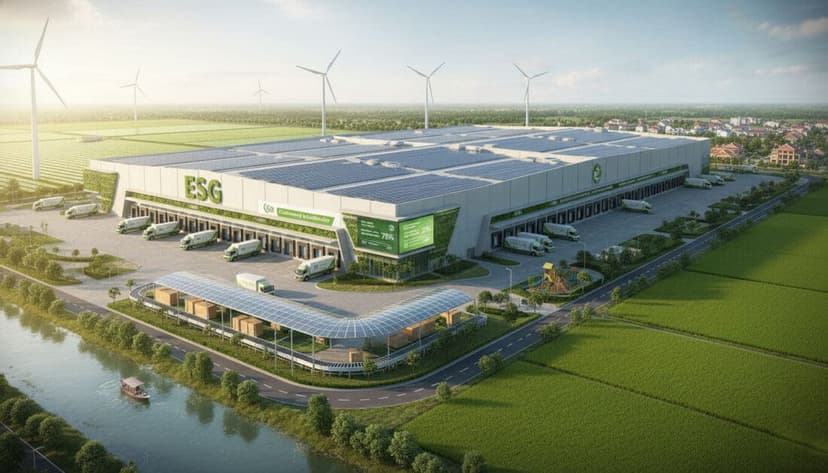
A modern warehouse in 2026 must be a self-sufficient energy ecosystem.
- Renewable Energy: Install rooftop solar power systems. This is an extremely effective solution in Vietnam for self-sufficient power supply for lighting, cooling, and electric forklift charging systems.
- Smart Design: * Utilize motion-sensor LED lights (only illuminate when occupied).
- Leverage natural light and ventilation to reduce electricity costs by 20-30%.
- High-bay Racking Systems (AS/RS): Reduce ground footprint, optimize storage space, thereby decreasing the energy required for operation per product unit.
3. Sustainable Packaging & Reverse Logistics
“Green” starts from the packaging. Let’s eliminate the concept of waste from the supply chain.
- Circular Materials: Use 100% recycled cardboard boxes or biodegradable packaging. Replace plastic shrink wrap with reusable materials.
- Reverse Logistics: Design processes to retrieve packaging or old products from customers for recycling. This not only helps reduce waste but also fosters a strong connection with environmentally conscious customers.
- Minimalist Packaging Design: Reduce packaging size to fit products snugly, increasing stacking density on pallets and consequently reducing the number of required trips.
4. Measurement Technology & Data Management
You cannot improve what you cannot measure.
- Carbon Footprint Reporting (Carbon Tracking): Integrate CO2 emission calculation tools per order into management software. This is a mandatory requirement to meet ESG standards and report to international partners.
- IoT & Big Data: IoT sensors monitor driving behavior (hard braking, speeding leading to fuel waste) to train drivers for more economical operation.
| Solution | Investment Cost | Return on Investment (ROI) | Environmental Impact |
|---|---|---|---|
| AI Route Optimization | Low | Very Fast (3-6 months) | Reduce 10-15% emissions |
| Warehouse Solar Power | Medium – High | Medium-term (3-5 years) | Reduce 30-50% electricity consumption |
| Recycled Packaging | Low | Immediate | Reduce 80% plastic waste |
| Electric Vehicle Conversion | Very High | Long-term (5-7 years) | Reduce 100% direct emissions |
Green credit funds are currently offering significant interest rate incentives (2-3% lower than usual) for businesses with electric vehicle conversion or solar power installation projects. This presents a golden opportunity for businesses to leverage financial support for Green Logistics.
Challenges & Future of Green Logistics in Vietnam
Implementing green logistics in Vietnam faces barriers related to investment costs, infrastructure, and human resources, yet it simultaneously unlocks significant opportunities for exports, attracting FDI, and enhancing competitiveness amidst increasingly stringent ESG and Net Zero standards.
Transitioning to a green model is a challenging “marathon” but also promises worthy rewards for persistent businesses. In Vietnam by 2026, this journey is entering a decisive phase where the line between risk and opportunity is clearer than ever.
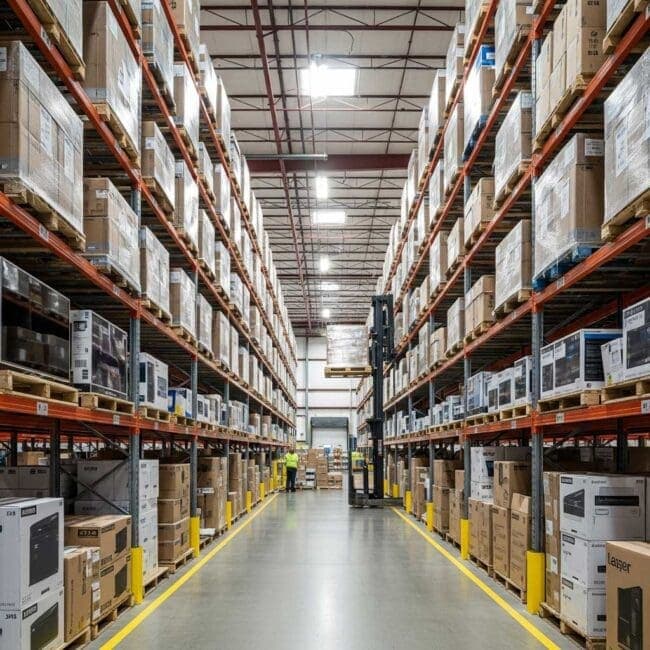
1. The “Cornerstones” on the Green Transformation Journey
Despite understanding the benefits, businesses still face significant challenges:
- Heavy initial investment costs (CAPEX): Transitioning to electric trucks or installing automated warehouse systems requires substantial capital. According to IEA data, the initial investment cost for electric trucks is typically 20-40% higher than traditional diesel vehicles.
- Inconsistent technical infrastructure: The fast-charging station system for heavy-duty transport vehicles in Vietnam is still under construction and does not yet cover all major highways.
- Scarcity of specialized human resources: Managing a green supply chain requires knowledge of ESG, carbon footprint measurement, and AI technology operation. This remains a “talent gap” in the Vietnamese market today.
- Long Return on Investment (ROI) period: Green logistics is a long-term benefit equation, while many small and medium-sized enterprises (SMEs) are still struggling with short-term financial pressures.
2. Future Vision: When “Green” is the #1 Competitive Advantage
Despite the challenges, Vietnam possesses a “golden opportunity” to become the region’s green logistics hub:
- “Passport” to international markets (EVFTA): With new-generation free trade agreements, Vietnamese businesses with green transportation processes will be prioritized for access to demanding markets like the EU, significantly enhancing the value of exported goods.
- Wave of Green & Eco-Industrial Parks: Industrial parks (IPs) in Binh Duong, Bac Ninh, and Hai Phong are pioneering the installation of rooftop solar energy and smart wastewater treatment systems, creating a ready-made ecosystem for businesses to immediately lease “green” warehouses.
- Power from Digital Transformation: The explosion of 5G and AI in Vietnam is helping optimize supply chains at a lower cost. Technology enables even small businesses to participate in the “green” game by optimizing routes with software.
- Attracting “clean” FDI capital: Multinational corporations (such as LEGO, Samsung, Apple) investing in Vietnam require local logistics partners to meet sustainability standards, opening up huge cooperation opportunities for companies willing to change.
Don’t view green logistics as an expense; see it as an insurance investment for the future. Businesses that start transforming now are the ones who will set the rules of the game for the market in the next 5 years.
Green Logistics Transformation Roadmap for Businesses
SMEs can start green logistics by optimizing operations before making large investments in green technology or vehicles.
The green transformation roadmap for small and medium-sized enterprises (SMEs) doesn’t necessarily have to be an immediate “money-burning” venture into electric vehicles or robots. The secret lies in a “Low hanging fruit” strategy – prioritizing inexpensive changes that yield immediate results before moving on to larger investments.
Below is a 5-stage roadmap designed specifically for SMEs in Vietnam in the context of 2026:
Stage 1: Measurement & Digitization (January – April)
You cannot improve what you cannot measure. The goal of this stage is to build a “data foundation.”
- Emissions inventory: Use simple calculation tools to determine the CO2 emissions from the current fleet and warehouses.
- Process digitization: Transition from manual/Excel management to basic warehouse management software (WMS) or transport management software (TMS) to track fuel consumption.
- Establish green KPIs: Incorporate “Emissions per order” into operational goals alongside cost metrics.
Phase 2: “Low-Cost” Optimization (May – December)
This is the “greening” phase driven by mindset, not money.
- Route Optimization: Utilize route optimization software to reduce travel distance and avoid traffic jams. Simply cutting 10% of empty mileage can make you significantly “greener.”
- Packaging Improvements: Switch to paper tape, recycled cardboard boxes, or minimalist packaging designs to increase loading density.
- Driver Training: Instruct drivers on fuel-efficient driving techniques (e.g., reducing sudden braking, turning off engines during long stops).
Phase 3: “Greening” Existing Infrastructure (Year 2)
Start investing in areas with the quickest Return on Investment (ROI).
- Energy-Efficient Warehouses: Replace the entire lighting system with sensor-controlled LEDs and repaint warehouse roofs with heat-reflective paint to reduce cooling costs.
- Rooftop Solar Power: If the warehouse is owned by your company, installing solar panels is a long-term solution to reduce electricity costs.
- Green Partnerships: Prioritize selecting 3PL (third-party logistics) partners who already have green certifications or use electric vehicles for last-mile deliveries.
Phase 4: Vehicle & Technology Transformation (Year 3 Onwards)
Once you’ve accumulated savings from energy efficiency in previous phases, you can then move towards investing in equipment.
- Electric Vehicle (EV) Transition: Begin replacing old last-mile delivery vehicles with electric motorcycles or electric cargo vans.
- Smart Automation: Install IoT sensors to automate warehouse environment adjustments, minimizing energy waste.
Phase 5: ESG Reporting & International Certifications (Ongoing)
Turn your green efforts into “currency” to attract funding and expand market reach.
- Complete ESG Reporting: Utilize accumulated data to compile a comprehensive sustainability report.
- Pursue Certifications: Apply for certifications like ISO 14001 (Environmental Management) or Green Logistics awards to boost credibility when bidding for international projects or exporting to the EU.
Summary Table: Roadmap & Estimated Budget
| Phase | Focus | Investment Level | Economic Impact |
|---|---|---|---|
| Phase 1 | Data & Digitalization | Low | Loss control achieved |
| Phase 2 | Operational Optimization | Low | 10-15% fuel savings |
| Phase 3 | Electricity & Warehousing | Medium | 30% reduction in electricity bills |
| Phase 4 | EVs & Robotics | High | 90% reduction in fossil fuel costs |
| Phase 5 | Certifications & ESG | Medium | Opens doors for export, easier fundraising |
Green logistics is no longer an option, but a long-term strategy that helps businesses optimize costs, enhance brand image, and meet global standards.
Green logistics starts with measurable improvements
Green logistics reduces the environmental impact of transport, storage and handling while maintaining service requirements. A small business can begin with fewer empty trips, suitable reusable packaging or better equipment schedules, rather than an expensive system. Compare before and after on the same boundary; “green” should not merely describe a vehicle, material or warehouse.
How green logistics differs from ESG
Green logistics focuses on environmental impacts. ESG also covers social and governance issues, including worker safety, complaints and responsibility for data checks. Use warehouse ESG KPIs to place an environmental initiative within a wider management system. Customer requests for data or resource efficiency do not imply a universal “green logistics permit”; verify requirements against the activity, market and contract.
Five groups of practical measures
| Measure | Implementation | Conditions to check |
|---|---|---|
| Consolidation and route optimization | Coordinate collections, deliveries and return trips; remove unnecessary stops. | Avoid delays or higher damage risks; record actual loads. |
| Reduce warehouse waste | Review lighting, equipment schedules and movement flows. | Do not compromise storage conditions, ventilation or safety. |
| Reusable packaging | Use recoverable boxes or trays and inspect each cycle. | Consider recovery, cleaning, durability and suitability for the goods. |
| Reduce damaged goods | Check condition, packing, placement and handling. | Record causes, not just total loss. |
| Reverse logistics | Recover goods and packaging and sort their destinations. | Distinguish reuse, repair, recycling and separately managed waste. |
Before changing routes or goods flows, standardize receiving, location recording and dispatch. With inconsistent input data, it is hard to distinguish real savings from changes in recording.
Worked example: fewer kilometres for the same deliveries
Hypothetical example, not a MyStorage result: a route carrying the same quantity of goods with the same service requirements falls from 1,000 km to 850 km. Assuming unchanged consumption of 0.12 litres/km:
- Before: 1,000 × 0.12 = 120 litres.
- After: 850 × 0.12 = 102 litres.
- Difference: 18 litres, or 15% of the baseline.
Actual consumption varies with loads, congestion, idling and route conditions. Check real fuel use and delivery quality. This is not yet a CO₂e reduction; conversion needs an appropriate factor and method. The GHG Protocol is an inventory reference. Report boundaries, data types, factors and exclusions; do not present this example as company emissions performance.
Tracking a green logistics trial
| Indicator | Track | Interpretation |
|---|---|---|
| Distance and fuel | Km, litres, trips and actual loads. | Compare the same service level; explain route and load changes. |
| Warehouse electricity | Total kWh and activity-based intensity. | Consider hours, throughput and storage conditions together. |
| Packaging | New purchases, recovered, reused and discarded materials. | Include circulation and cleaning costs. |
| Service quality | On-time delivery, damage and feedback. | Savings are not meaningful if failures increase. |
| Total cost | Investment, maintenance, labour, transport and treatment. | Do not compare equipment prices or electricity bills alone. |
Is choosing a certified green warehouse enough?
Building certification is useful, but check the scope and stage of LEED, EDGE or LOTUS. Design conditions do not guarantee a fixed reduction in actual bills; throughput, hours and operation affect results. Confirm the service facility, available data and electricity cost allocation. For storage with operational support, agree receiving, retrieval, packing and transport scope so quotations cover the same work.
A plan for businesses with limited budgets
- Choose a waste source: use bills and logs, not impressions.
- Record a baseline: represent normal operation and flag peak or unusual weeks.
- Trial a small change: one route, packaging group or equipment area.
- Track quality: retain on-time, damage and feedback data alongside savings.
- Decide whether to scale: assess total cost, maintainability and reconciled data.
Common barriers include missing data, divided responsibilities and split incentives: one party invests while another receives the savings. Agree measurement and cost allocation before implementation.
Communicating results responsibly
State the period, scope, method and limitations; distinguish measured and estimated results. A packaging change does not make the whole supply chain “zero-emission”. Report community activities separately from environmental improvements.
Frequently asked questions
1. What is the core goal of Green Logistics?
The primary goal is to minimize the environmental impact of supply chain activities, such as CO2 emissions, waste, and noise, while maintaining economic efficiency.
2. Why is Green Logistics a "must" in 2026?
Due to strict international regulations like the EU’s Carbon Border Adjustment Mechanism (CBAM) and global Net Zero commitments, “green” is now a mandatory “passport” for businesses to export and join global supply chains.
There is no universal conclusion that every business must implement green logistics from 2026. Check obligations by goods, market, law and contract.
3. Does "Green" always mean "Expensive"?
While initial investment (CAPEX) for EVs or solar panels can be high, Green Logistics reduces operational costs (OPEX) in the long run through energy savings, fuel optimization, and reduced waste.
4. How can SMEs start with Green Logistics on a budget?
SMEs should start with “Low-hanging fruit” solutions: optimizing transport routes using AI, improving packaging materials, and digitizing records to reduce paper waste.
5. What are the key elements of a "Green Warehouse"?
A green warehouse features rooftop solar energy, LED lighting with motion sensors, natural ventilation, and a Smart Warehouse Management System (WMS) to optimize space and energy.
6. What is "Reverse Logistics" in a green context?
It refers to the process of collecting used products or packaging from customers for recycling, refurbishing, or safe disposal, forming a “Circular Economy.”
7. How does AI contribute to Green Logistics?
AI helps calculate the shortest, most fuel-efficient routes, predicts demand to reduce overstocking, and monitors carbon footprints in real-time.
8. What are the biggest challenges for Green Logistics in Vietnam?
The main obstacles include limited EV charging infrastructure for heavy trucks, high initial costs, and a lack of specialized human resources for ESG management.
9. What is the role of ESG in attracting investment?
Investors in 2026 prioritize businesses with high ESG scores. Green Logistics practices directly improve the “E” (Environment) pillar, making the company more attractive for “Green Credit” with lower interest rates.
10. How to measure the success of a Green Logistics strategy?
Success is measured through specific KPIs: Carbon emissions per shipment, percentage of renewable energy used, waste recycling rate, and the Return on Investment (ROI) from energy-saving initiatives.
11. Is green logistics just switching to electric vehicles?
No. Routes, loads, packaging, warehouse electricity and damage rates can all be improved. Assess each measure within a suitable boundary.
12. What should a small business do first?
Choose a problem with available data, trial a small change, and measure both cost and service quality.
13. Is reusable packaging always better?
Not necessarily. Consider the number of cycles, return transport, cleaning, damage and goods type.
14. Do lower electricity bills prove lower emissions?
Not alone. Electricity consumption, boundary, factors and calculation method are needed; a tariff change may also lower the bill.
15. Is a green warehouse always cheaper?
No. Compare total costs and service conditions using actual data, not an assumed saving percentage.
16. Does delivery consolidation always reduce environmental impact?
Not always. Evaluate distance, load, redelivery, waiting time and damage risk.
17. When should used packaging be discarded?
Remove packaging that is mouldy, torn, deformed or no longer strong enough. Select suitable cardboard boxes based on the goods, not reuse alone.
18. Which costs matter when comparing green warehouses?
Consider storage, electricity, transport, handling and damage risk. A storage cost breakdown helps compare the whole service, not just rent.
Related articles
Article
Onshore vs Offshore: Which Manufacturing Model Should Businesses Choose?
Onshore manufacturing refers to production within a company’s home country, helping to control quality, shorten delivery times, and ensure easier regulatory compliance. Offshore…
Read article
Article
How to Organize Your Home Storage Room Neatly | 10 Space Optimization Tips
To organize your home storage neatly, categorize items by purpose, discard unnecessary belongings, utilize vertical shelving to optimize height, and label every container. If your home…
Read article
Article
Secrets to Profitable Online Selling: 10 Ways to Save Costs
To sell online profitably, you not only need to increase sales but also maintain good control over operating costs. Items such as inventory, premises, packaging, shipping, and order…
Read article
