
 Tiếng Việt
 한국어
한국어 日本語
日本語Article
What Is CBM? How to Calculate Cubic Meters for Cargo and Logistics
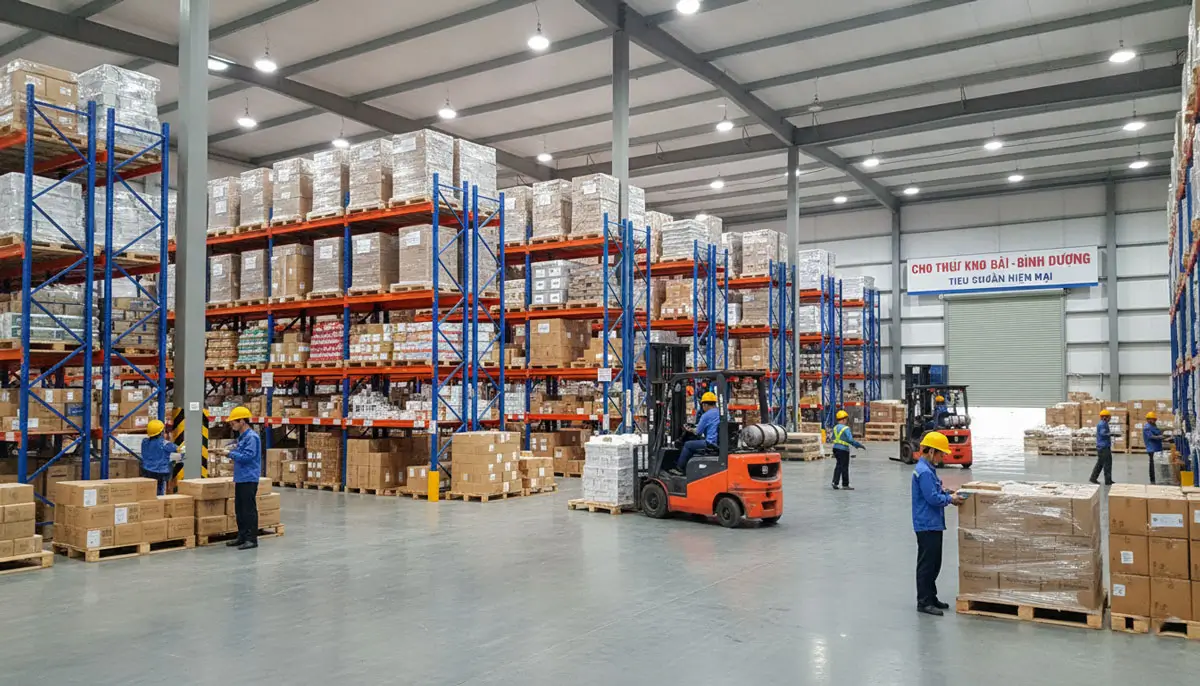
CBM (cubic meter) measures the volume occupied by a shipment. Calculate it by multiplying its packaged length, width and height in meters. In logistics and import/export, CBM helps plan storage and transport capacity and is especially relevant to LCL freight quotations.
What is CBM?
CBM stands for Cubic Meter, meaning cubic meter. 1 CBM is equivalent to the volume of a block of goods with length, width and height all equal to 1 meter. In logistics, CBM is used to represent the volume of goods, thereby supporting the calculation of shipping space, storage and freight.
Correctly understanding the nature of the acronym will help avoid confusion when reading documents or exchanging with international partners:
- CBM stands for Cubic Meter.
- In Vietnamese, CBM is called cubic meter.
- A common symbol on documents is m³.
- In terms of calculation: 1 CBM = 1 m × 1 m × 1 m.
Many people new to logistics often confuse CBM and KG, while these are two quantities that measure completely different aspects of the same shipment:
|
Quantity |
Measurement |
Unit |
Application |
|---|---|---|---|
|
CBM |
Volume and space occupied by goods |
m³ |
Plan loading, storage and volume-based freight when applicable |
|
KG |
Weight of goods |
kg |
Check load limits and weight-based freight when applicable |
The point to emphasize is that CBM and KG do not replace each other. In actual transportation, service providers often consider both the actual weight and the converted volumetric weight, depending on the mode of transport and the freight regulations applicable to each route. If you need a broader understanding of the symbols that appear on documents, you can refer to glossary of import-export and logistics terms.
When is CBM used?
CBM appears in most stages related to the commodity space in the supply chain, specifically in the following situations:
- Importing goods.
- Export of goods.
- LCL shipping (LCL).
- Calculate the space used in the container.
- Calculate storage capacity or volume.
- Pallet planning.
- Estimate overall logistics costs.
At the warehouse planning stage, CBM indicates the amount of space that can be occupied, but the floor area also depends on the loading height and aisles. Article enterprise warehouse design helps place this volume figure in the context of the actual spatial layout.
How to calculate cargo CBM
The basic formula for calculating CBM is length times width times height, with all dimensions converted to meters. If there are multiple packages of the same size, simply multiply the CBM of one package by the number of packages. This is also the volume calculation used when declaring LCL shipments; Maersk explains that LCL space is measured by CBM.
Calculate the CBM of one package
The general formula and also the most commonly applied formula in the logistics industry is as follows:
CBM = Length (m) × Width (m) × Height (m)
Illustrative example: a package has a length of 2 m, a width of 1.2 m and a height of 0.8 m will have a volume of 2 × 1.2 × 0.8 = 1.92 CBM.
Convert centimeters to meters first
In fact, the size of goods is often measured in centimeters instead of meters, so the unit conversion step is a mandatory operation before applying the formula, with the convention that 100 cm is equal to 1 m.
For example, a package with dimensions of 120 cm × 80 cm × 50 cm, after conversion, will be equivalent to 1.2 m × 0.8 m × 0.5 m, giving the result CBM = 0.48 m³.
Calculate total CBM for identical packages
When the shipment includes multiple packages of the same size, simply calculate the CBM of one package and multiply it by the total number of packages, according to the formula: Total CBM = CBM of one package × Number of packages.
For example, with 20 boxes, each box has dimensions of 0.5 m × 0.4 m × 0.3 m, the volume of each box is 0.06 CBM, so the total volume of the entire shipment is 20 × 0.06 = 1.2 CBM.
Calculate CBM for packages of different sizes
With a shipment containing many types of products with different sizes, you should create a separate spreadsheet for each type before adding up the total to avoid errors, for example as follows:
|
Package type |
Dimensions (m) |
Quantity |
CBM/package |
Total CBM |
|---|---|---|---|---|
|
A |
0.5 × 0.4 × 0.3 |
10 |
0.06 |
0.60 |
|
B |
1.0 × 0.6 × 0.5 |
4 |
0.30 |
1.20 |
|
Total |
— |
14 |
— |
1.80 |
The above table is an illustrative example of calculation, not the parameters of an actual shipment. If you need to estimate warehouse rental space after having a CBM number, businesses can use warehouse size estimation tool using AI as an initial reference step.
Why can the CBM on shipping documents differ from actual measurements?
The CBM number initially calculated on paper does not always match the actual measurement when the goods have been packaged and loaded onto the vehicle, due to the influence of the following factors:
- Type of packaging used.
- Pallets included.
- Packing method.
- Actual stacking method.
- Actual dimensions after complete packaging.
Especially with LCL cargo, actual measurements at the container freight station (CFS) may differ from the initial estimates; This directly affects the final shipping costs that businesses must pay.
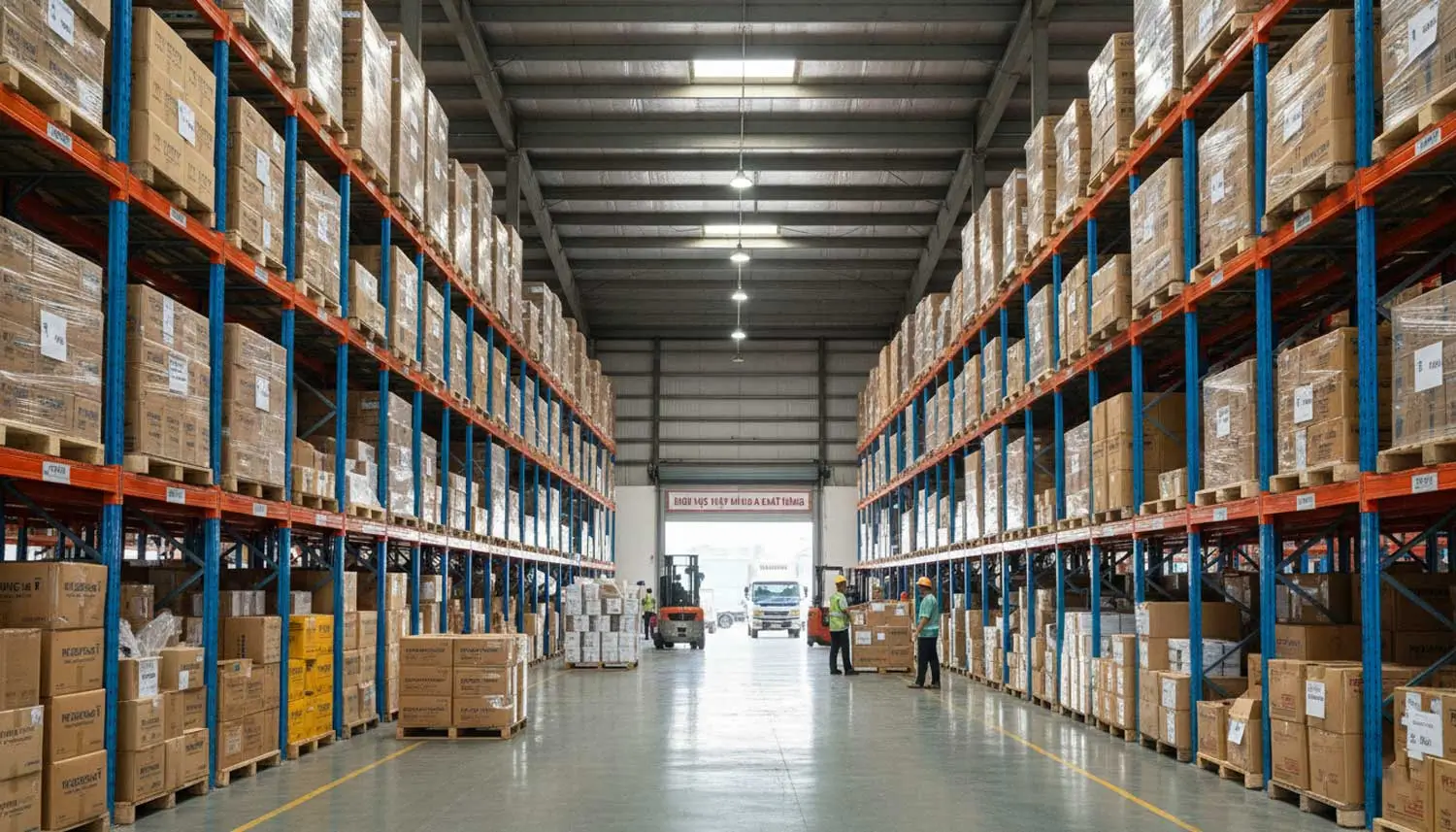
A ready-built warehouse with pallet racks and handling aisles; usable capacity depends on stacking height and operating space, not CBM alone.
How CBM supports warehousing and logistics
In logistics, CBM helps businesses determine the amount of space that goods need to use, thereby supporting storage planning, pallet arrangement, container usage and transportation coordination. CBM is not just a simple volumetric measurement but is also an input for many warehouse and logistics operations decisions.
In day-to-day warehouse operations, CBM data for each shipment is used to support a variety of operational decisions, including:
- Estimating the warehouse capacity required for an incoming batch.
- Allocate storage locations appropriate to shipment size.
- Calculate the maximum storage capacity of the warehouse.
- Plan for import and export of warehouse on schedule.
- Optimize container space and transportation facilities.
For businesses that need flexible storage space, shipment volume is a useful data when discussing enterprise warehouse solutions; However, the quote also needs the type of goods, packaging, import and export frequency and accompanying services.
Estimate pallet count and warehouse capacity
CBM is often used to roughly estimate the number of pallets needed for a shipment before actual packing. However, the final actual number of pallets depends on the loading method, carton size and pallet specifications used, so the initial estimate is only a reference for planning and should not be considered an absolute fixed figure. Choosing suitable warehouse racking type also affects how the volume is utilized.
Plan vehicles and containers
When choosing a transportation plan, CBM data helps businesses evaluate many important aspects:
- How much space does the cargo take up on the vehicle?
- Which shipping method should be used accordingly?
- Whether the goods can be combined with other batches or not.
- Ability to use containers effectively.
- The degree of space utilization of the transport vehicle.
To make a decision, you need to consider the load, door size, delivery schedule and warehouse access limits. These elements are illustrated in the article on freight truck types and warehouse access.
How CBM affects LCL and FCL shipping
CBM is especially important in LCL shipping because businesses often pay costs based on the space used by the goods, instead of renting an entire container like FCL. With LCL, cargo volume is expressed in CBM and can be one of the bases for calculating freight, while with FCL, businesses order entire containers, so the way to calculate costs is completely different from LCL.
LCL: Shared container shipping
LCL (Less than Container Load) is a form of LCL cargo transportation in which many different shippers use the same space of a container. With this form, CBM is used to determine cargo volume, occupied cargo space and serve as a basis for calculating freight by weight or volume depending on the shipping route and quote conditions of each unit. DHL Global Forwarding describes how to quote LCL by weight or volume (W/M): weight in tons and volume in CBM; The part used to calculate charges depends on the specific quote.
FCL: Full-container shipping
FCL (Full Container Load) is a form of using an entire container for a shipment, clearly different from LCL in many aspects:
|
Criterion |
LCL |
FCL |
|---|---|---|
|
Container use |
Cargo from multiple shippers shares one container |
One shipper uses an entire container |
|
Role of CBM |
Helps determine the space used by a shipment |
Helps assess how efficiently the container is filled |
|
Pricing basis |
Often W/M plus related charges |
Often per container plus related charges |
|
Best suited to |
Shipments that do not require a full container |
Shipments that require or efficiently fill a full container |
The relationship between CBM and transportation costs can be visualized through a chain of cause and effect relationships: cargo size → CBM number → shipping method and freight calculation rules → total logistics cost.
However, it should be noted that it should not be simply understood that just by having a CBM number, you can accurately calculate the shipping fee, because the actual fee depends on the route, type of goods, mode of transport, agreed commercial conditions and the individual fee schedule of each carrier at each time. If goods are sorted and moved quickly through the warehouse, article cross-docking process helps distinguish the transshipment model from conventional warehousing.
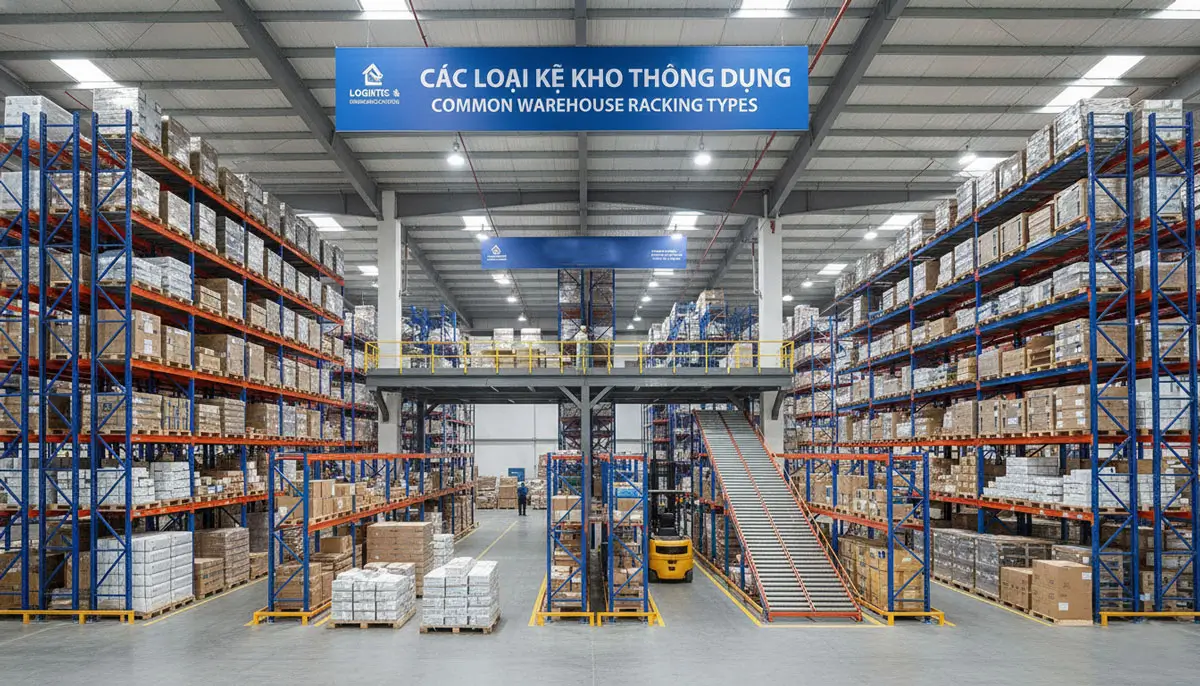
Multi-level pallet racking uses vertical space; actual capacity also depends on pallet dimensions and aisle requirements.
CBM vs volumetric weight vs chargeable weight
CBM is a volume measurement, while volumetric weight is a way of converting the volume of goods into a weight value to serve the calculation of charges according to each mode of transportation. Therefore, it is necessary to clearly distinguish CBM from gross weight, volumetric weight and chargeable weight, because these are confusing concepts but serve different purposes in cost calculation.
CBM vs gross weight
These two quantities measure two completely different attributes of the same shipment, specifically:
- CBM reflects the volume, that is, the space occupied by the goods.
- Gross weight reflects the total weight, usually including the goods and packaging.
For packages that are too heavy or bulky, compare both measurements before choosing a storage and transportation option; Article calculate the volume of heavy, bulky goods goes deeper into this step.
CBM vs volumetric weight
CBM is input data to determine the volume of goods, while volumetric weight is a number converted from that volume according to a certain division factor. This coefficient varies depending on the mode of transport, service and carrier. This is one of the most confusing points when businesses are new to international freight calculation, because the same shipment can have different chargeable weight results depending on the shipping method chosen.
According to DHL Express Vietnam service guide 2026, the volumetric weight is calculated as length × width × height (cm) divided by 5,000 for each package. For general aviation, the example calculated in IATA documents uses the factor 6,000, equivalent to about 167 kg volumetric weight for 1 CBM. For sea LCL, the provisions of Maersk state the conversion of W/M according to 1 CBM equivalent to 1,000 kg for comparison with actual weight. These are rules for each service and quote conditions, not a general formula for all shipments.
Because the methods have different unit prices and charging bases, it is not possible to simply compare the numbers 167, 200 and 1,000 kg to conclude which method is cheaper. Need to request a quote based on route, type of goods and specific shipping conditions.
Chargeable weight
Chargeable weight is the weight used as the final basis for calculating shipping charges; For services that apply comparison rules, it is usually the greater of the actual weight and the converted volumetric weight. CBM should not be identified with chargeable weight, because CBM is just volume, while chargeable weight is the result after applying the service's rules to select the chargeable value.
Related logistics terms
When working with CBM in practice, you should know some related terms that often appear together on documents and shipping quotes:
- LCL (Less than Container Load): LCL cargo, many shippers sharing the same container.
- FCL (Full Container Load): full container goods, a shipment uses an entire container.
- CFS (Container Freight Station): warehouse for LCL cargo handling and packing of LCL cargo.
- TEU (Twenty-foot Equivalent Unit): equivalent unit of 20 feet container.
- FEU (Forty-foot Equivalent Unit): equivalent unit of 40 feet container.
- Gross Weight: gross weight, including goods and packaging.
- Net Weight: net weight, cargo only.
- Volumetric Weight: volumetric weight, converted from volume according to the coefficient of each mode of transportation.
- Chargeable Weight: freight weight, final value used to apply freight.
- Pallets: pallets are used to stack and move goods in blocks.
- Container: standard containers used in sea and multimodal transportation.
Tips for calculating CBM accurately
In order for CBM to closely reflect the actual quantity of goods, businesses should use the size of the goods after packaging, carefully check the number of packages and confirm the measurement with the forwarder or carrier before finalizing the data. Discrepancies between declared size and actual size can directly affect freight rates, especially with LCL goods.
Measure after packaging
A common mistake is to only measure the size of the product itself and forget to include the packaging, causing the declared CBM number to be lower than reality. Need to measure the correct size after the goods have been:
- Packed in cartons.
- Packed on pallets.
- Wrap the protective film.
- Packed in wooden cases.
Check units and package count
Errors in unit conversion are a common cause of completely incorrect CBM results, so be especially careful when converting between units:
- From centimeters to meters.
- From millimeters to meters.
- From inches to meters.
In addition to size, the number of packages is also a factor that needs to be carefully checked before calculating the total CBM, because if the number of packages is incorrectly declared, the total CBM result of the entire shipment will be incorrect, even though the calculation formula for each package is still completely accurate.
Confirm measurement and freight rules
Each forwarding unit or carrier may apply different measurement methods and conversion factors, so confirming in advance will help avoid disputes about freight charges later. Confirming the calculation is especially important when:
- LCL shipments.
- Large sized goods.
- Heavy goods.
- Palletized goods.
- Goods with special shapes that are difficult to measure accurately using conventional methods.
Correctly understanding the calculation and role of CBM helps businesses be more proactive in planning storage, choosing transportation methods and estimating logistics costs before working with forwarders. However, CBM is only one of many input factors to calculate the final freight, so businesses still need to compare it with the actual weight, conversion coefficient of each shipping method and the specific fee schedule of the shipping unit to have the most accurate cost figure for each shipment.
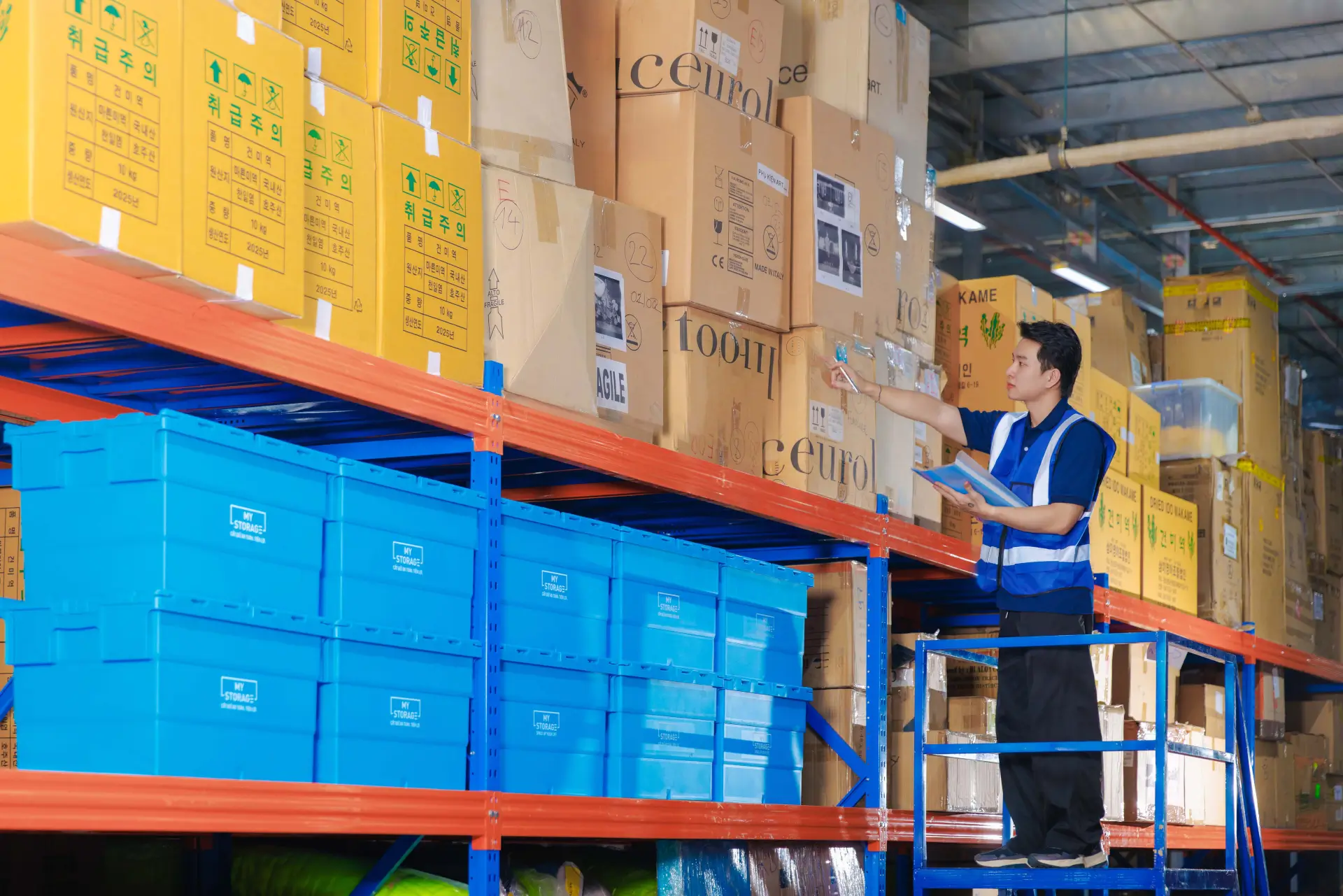
Goods on pallets, stock inspectors and forklifts in the warehouse – illustrating how to calculate CBM for logistics storage and transportation planning
Frequently asked questions about CBM
1. What is CBM?
CBM stands for Cubic Meter, or cubic meter. This is the unit of measurement for the volume of goods or shipments.
2. What is the formula to calculate the CBM of a package?
Take length times width times height, after all dimensions have been converted to meters: CBM = Length (m) × Width (m) × Height (m).
3. Dimensions measured in centimeters, how to calculate CBM?
Divide each centimeter measurement by 100 to convert to meters, then multiply the three dimensions. For example, 120 × 80 × 50 cm is equivalent to 1.2 × 0.8 × 0.5 m = 0.48 CBM.
4. If there are many packages of the same size, how to calculate the total CBM?
Calculate the CBM of one package, then multiply by the total number of packages. If the sizes are different, calculate each group separately and then add the results.
5. Are CBM and kg the same?
No. CBM measures volume, while kg measures weight. A shipment needs both data to evaluate space, load and freight conditions.
6. Does CBM accurately determine freight rates?
No. Charges depend on the mode of transport, route, type of goods, weight, surcharges and conditions in the shipping unit's quote.
7. Why is CBM especially important for LCL goods?
LCL cargo shares containers with many shippers. CBM represents the space a shipment uses and is usually one of two bases of comparison based on the weight/volume (W/M) rule.
8. Does FCL need to calculate CBM?
Yes. Although the price for renting a whole container is usually not calculated directly according to each CBM like LCL, the volume still helps evaluate whether the shipment fits in the container and uses space effectively or not.
9. Measure CBM before or after packaging?
The outer dimensions of the package should be used after complete packaging, including packaging, pallets or wooden cases if they are part of the delivered unit.
10. Can CBM be used to select warehouse size?
Can be used for initial estimates. However, when choosing a warehouse, you must also consider the loading height, aisles, shelves, approach and frequency of inbound and outbound movements.
11. Is volumetric weight calculated the same for all carriers?
No. For example, DHL Express uses a coefficient of 5,000 for its express delivery service, while some examples of regular air freight calculations use 6,000. Please check the actual service quote.
12. Why are CBM declared and CBM at CFS warehouse different?
Goods may be repackaged, re-palletized or measured according to actual dimensions at the warehouse. It is necessary to compare the measurement sheet and the quote conditions to understand the difference.
Related articles

Article
Factory Rental Process in Vietnam: From Legal Setup to Operations and Expansion
A practical guide to renting a ready-built factory in Vietnam: define technical requirements, verify legal, environmental and fire-safety procedures, assess operating support and total…
Read article

Article
How to Protect Wooden Furniture During the Rainy Season: Prevent Mold and Warping
Learn how to protect wooden furniture during the rainy season: identify moisture damage, dry water exposure, pack furniture correctly and manage humidity. Compare standard and…
Read article
Article
What Is Cross-Docking? Process, Types and Applications in Logistics
What is cross-docking, and how does it differ from traditional warehousing? Explore the process, main types, benefits, limitations and industry applications, plus scheduling, data and WMS…
Read article
